Baby Sleep Regression Ages Explained Month by Month
Your baby was finally sleeping well, maybe even through the night. Then one week, out of nowhere, the night wakings are back, naps fall apart and bedtime turns into a battle. It’s exhausting, and it’s hard not to wonder what you did wrong. Most likely, nothing. Sleep regressions are short stretches of worse sleep that tend to show up at predictable times, usually when your child is learning a big new skill or going through a change in how they sleep. Knowing the common sleep regression ages helps you spot one early, understand why it’s happening and know that it will pass. This guide walks through each regression from 4 months to 3 years, with the usual signs, how long each lasts and what helps.
If poor sleep comes with a fever, poor feeding, fewer wet diapers, breathing changes, ear pulling, unusual sleepiness or crying you can’t comfort, call your pediatrician. Those can be signs of illness, not a sleep regression. This guide is general, so if something doesn’t feel right, check with your doctor rather than waiting it out because someone else’s child went through the same thing.
What Is a Sleep Regression?
A sleep regression is a period, usually lasting a few weeks, when a baby or toddler who was sleeping fairly well suddenly starts sleeping worse. They may wake more at night, fight bedtime, take shorter naps or skip naps altogether.
The word “regression” makes it sound like your child is going backward, but most regressions happen because they’re moving forward. A new physical skill, a leap in awareness, a change in nap needs or a big change at home can all disrupt sleep for a while. Once your child adjusts, sleep usually settles again.
Signs of a Sleep Regression
Most sleep regressions share the same basic signs.
- More night wakings after a stretch of better sleep
- Trouble falling asleep at bedtime, or fussing and crying when put down
- Shorter naps, or refusing naps
- More crankiness during the day from less sleep
- Sometimes more feeding at night in younger babies
The key difference between a regression and other sleep problems is the timing. A regression comes on fairly suddenly and fades within a few weeks.
Sleep Regression Chart
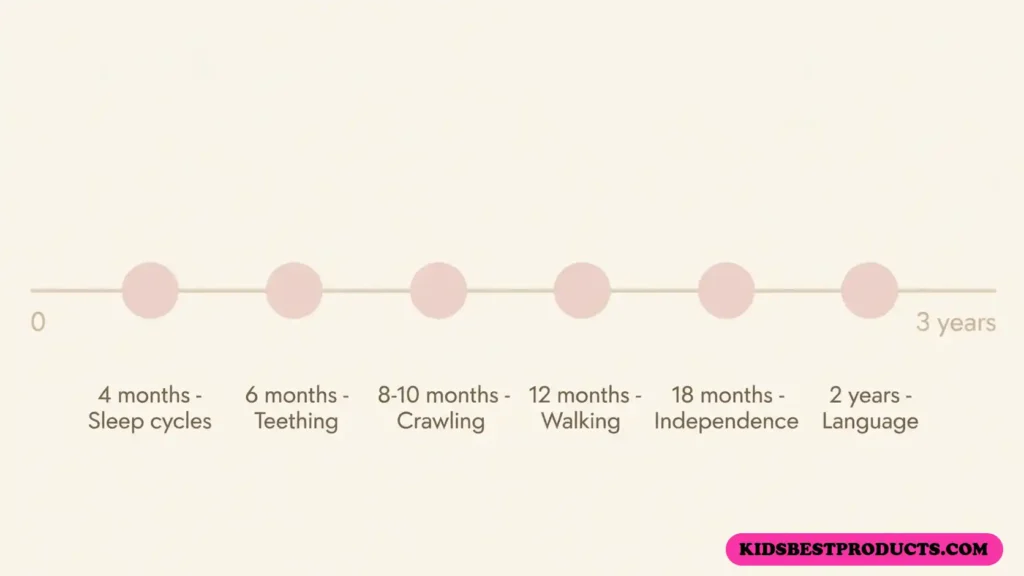
Not every child has every regression, and the ages vary. This chart shows when they most often happen and the usual cause.
Common Sleep Regression Ages and Causes
| Age | Main cause | How long it often lasts |
|---|---|---|
| 3 to 4 months | Sleep cycles change to adult-like stages | 2 to 6 weeks |
| 6 months | Rolling, sitting, nap changes | 2 to 4 weeks |
| 8 to 10 months | Crawling, pulling up, separation anxiety | 2 to 6 weeks |
| 12 months | Walking, pushing back on the second nap | 1 to 3 weeks |
| 18 months | Independence, molars, separation anxiety | 2 to 6 weeks |
| 2 years | Fears, nap changes, big life changes | 1 to 3 weeks |
| 3 years | Dropping the nap, imagination, nightmares | 1 to 3 weeks |
Lengths are typical ranges reported by pediatric sleep sources, not exact rules. Some children have a few rough nights, others several weeks.
Baby Sleep Regression Ages, Month by Month
3 to 4 Month Sleep Regression
This is the best known and, for many families, the hardest. Around 3 to 4 months, a baby’s sleep starts working more like an adult’s, with lighter and deeper stages in shorter cycles. Babies wake briefly between cycles and may need help to fall back asleep, so night wakings and short naps increase. Unlike the others, the change behind this one is permanent. See our full guide to the 4 month sleep regression, and our guide on whether there’s a 3 month sleep regression.
6 Month Sleep Regression
Around 6 months, many babies are rolling both ways, starting to sit, and sometimes beginning solid foods. Some are also cutting their first teeth or needing longer awake times between naps. Practicing new skills in the crib and a schedule that no longer fits are common reasons for broken sleep. Read more in our 6 month sleep regression guide.
8 to 10 Month Sleep Regression
This one often brings the biggest physical leaps. Babies are crawling, pulling up to stand and sometimes cruising along furniture, and many get stuck standing in the crib at night. Separation anxiety also tends to peak around this age, so your baby may cry when you leave the room. Some babies start earlier, around 7 months, often while moving from three naps to two. See our guides to the 7 month, 8 month, 9 month and 10 month sleep regression for details on each stage.
12 Month Sleep Regression
Around the first birthday, many children are learning to walk. Some start refusing their second nap, and parents assume it’s time to drop to one nap. Most children aren’t ready for that until around 14 to 18 months, so a short protest is often just a phase. Our guide on when babies drop to one nap explains the signs, and our 12 month sleep regression guide covers this stage.
Toddler Sleep Regression Ages
Regressions don’t stop after the first year. Toddler sleep problems are often tied to growing independence, new fears and big changes like a new bed or a new sibling.
18 Month Sleep Regression
At 18 months, many toddlers are discovering they can say no and want more control. Molars and canine teeth often come in around this age, and separation anxiety can return. Bedtime battles and night wakings are common. See our 18 month sleep regression guide.
2 Year Sleep Regression
Around age 2, common triggers include new fears of the dark, nap resistance, moving to a toddler bed, potty training and a new baby in the family. Many 2-year-olds stall at bedtime with extra requests. How long does a 2 year old sleep regression last? Often 1 to 3 weeks, especially with a steady routine. Our 2 year sleep regression guide covers it in full, including the 2.5 year stage, which many parents notice as well.
3 Year Sleep Regression
Many 3-year-olds start dropping their nap, which can make bedtime harder or lead to early waking. A growing imagination also brings fears and nightmares. If your 3-year-old has been awake for hours at night, check for causes like a nap that’s now too long or too late, a bedtime that’s too early, fears, or a recent change at home. Our guide on whether newborns can have bad dreams explains when nightmares and night terrors usually start and how to comfort a child after one.
Why Do Sleep Regressions Happen?
Most regressions come from one or more of these causes.
- New physical skills. Rolling, crawling, standing and walking are exciting, and babies often practice them at night.
- Brain development. Big leaps in awareness and understanding can make it harder to switch off.
- Changing sleep needs. As children grow, they need longer awake times and fewer naps, so an old schedule stops working.
- Separation anxiety. Once babies understand that you exist when you leave, bedtime separation can be harder.
- Teething and illness. These aren’t true regressions, but they often disrupt sleep at the same ages.
- Life changes. Starting daycare, travel, a move, moving to their own room or a new sibling can all affect sleep.
Is It Teething or a Sleep Regression?
They can look alike, and they sometimes happen together. Teething often comes with drooling, chewing on everything, swollen gums and fussiness that may be worse at certain times of day. A regression usually lines up with a new skill or a developmental stage, without those mouth signs. Teething sleep problems tend to come and go with each tooth, while a regression lasts a few weeks and then fades. If your child has a fever above 100.4°F (38°C), don’t assume it’s teething. Call your doctor.
How Long Do Sleep Regressions Last?
Most last somewhere between 2 and 6 weeks. Shorter ones can pass in a week or so. They tend to last longer when new sleep habits form during them, such as rocking to sleep every time or bringing a toddler into your bed. Keeping things as steady as possible helps them pass faster.
How to Help Your Child Through Any Sleep Regression
The details change by age, but these habits help at every stage.
- Keep the bedtime routine the same. The same steps in the same order every night help your child feel secure.
- Check the schedule. Many regressions happen when your child needs more awake time or fewer naps. Adjusting the schedule can fix a lot.
- Practice new skills during the day. Lots of floor time for rolling, crawling, standing and walking means less practicing in the crib.
- Help them fall asleep on their own. Putting your child down drowsy but awake helps them settle again between sleep cycles.
- Respond calmly and consistently. Comfort your child, but try not to start new habits you won’t want to keep after the regression ends.
- Pause before you go in. Many babies and toddlers stir and settle on their own. Our guide on baby crying in sleep explains when to wait and when to help.
- Keep sleep safe. For babies under 1, that means no pillows, blankets or bumpers in the crib, even during a hard patch. See the AAP’s safe sleep guide.
When to Talk to Your Pediatrician
Most sleep regressions pass on their own. Talk to your doctor if your child’s sleep problems last more than about 6 weeks, keep getting worse, or come with other symptoms such as snoring, pauses in breathing, fever, ear pain, poor feeding, or a loss of skills they had before.
Frequently Asked Questions
The Bottom Line
Knowing the common sleep regression ages won’t stop them, but it helps you understand what’s happening and stay calm through it. The most common times are around 4 months, 6 months, 8 to 10 months, 12 months, 18 months and 2 years, each linked to a new skill or a change in sleep needs. Most pass within 2 to 6 weeks. Keep routines steady, adjust the schedule as your child grows, keep sleep safe, and call your pediatrician if sleep problems come with signs of illness or don’t improve.
This article is for general information only. Every child is different, and it can’t replace advice from a doctor who has examined your child. If you’re worried about your baby or toddler, contact your pediatrician.

Newsletter Signup
Subscribe to our weekly newsletter below and never miss the latest product or an exclusive offer.