How Do You Clean Infant Ears? A Safe Step-by-Step Guide
You just finished bath time and noticed a little wax at the edge of your baby’s ear. Maybe you’ve got a cotton swab in your hand right now and you’re genuinely not sure if using it is fine or a mistake you’ll regret. Or maybe someone told you babies’ ears are “self-cleaning” and you’re wondering if that’s actually true or just something people say. Ear wax looks like something to wipe away, and that instinct is exactly what gets a lot of well-meaning parents into trouble. So here’s how do you clean infant ears the way pediatricians actually recommend, without the guesswork.
How do you clean infant ears safely? Wipe the outer ear and the skin around it with a soft, damp washcloth or cotton ball during bath time. Never insert anything into the ear canal itself, including cotton swabs, since the canal is self-cleaning and doesn’t need help. Earwax that you can see near the opening can be gently wiped away, but anything deeper should be left alone unless your pediatrician says otherwise.
Why Less Is More With Infant Ears
Earwax, medically called cerumen, isn’t dirt. It’s a protective substance the ear produces on purpose, and it does two jobs at once: it traps dust, debris, and germs before they reach the eardrum, and it keeps the ear canal from drying out. Most of it works its way to the outer ear naturally over time, dries out, and falls away on its own.
Because of that built-in system, the ear canal itself doesn’t need cleaning. Only the outer ear, the part you can actually see, benefits from a wipe now and then.
How Do You Clean Infant Ears? The Safe Washcloth Method
- Wet a soft washcloth or cotton ball with plain warm water. Skip the soap, since it isn’t necessary and can irritate a baby’s skin.
- Wring it out well so nothing drips into the ear.
- Wipe the outer ear and the skin behind it, following the visible folds and creases where lint, sweat, or spit-up tends to collect.
- Gently wipe away any wax you can see right at the opening of the ear, without pushing inward.
- Pat the area dry with a clean towel once you’re done.
This is essentially how to clean a baby’s ears in one line, and it works well folded into bath time, right alongside cleaning your baby’s face and hands, so it becomes routine rather than a separate task.
What Not to Use, Ever Clean Infant Ears
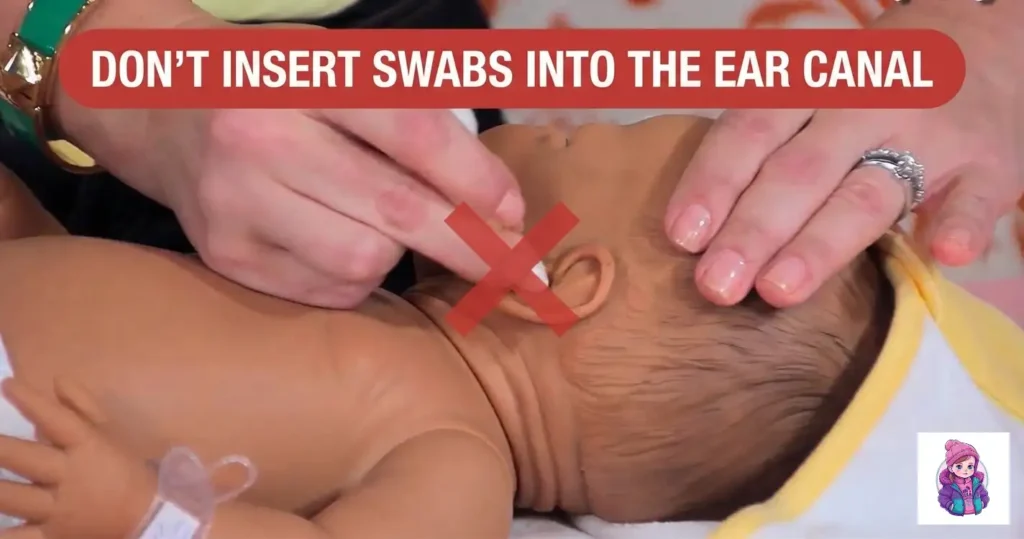
Cotton swabs are the one thing every pediatric source agrees on: keep them out of a baby’s ear canal entirely. Since 1990, cotton-tip applicators have caused enough ear canal, eardrum, and hearing bone injuries in children to send more than 260,000 kids to the emergency room in the United States, most often from an object getting stuck or a perforated eardrum. That number reflects exactly how easy it is to misjudge how deep is too deep in an ear canal that small.
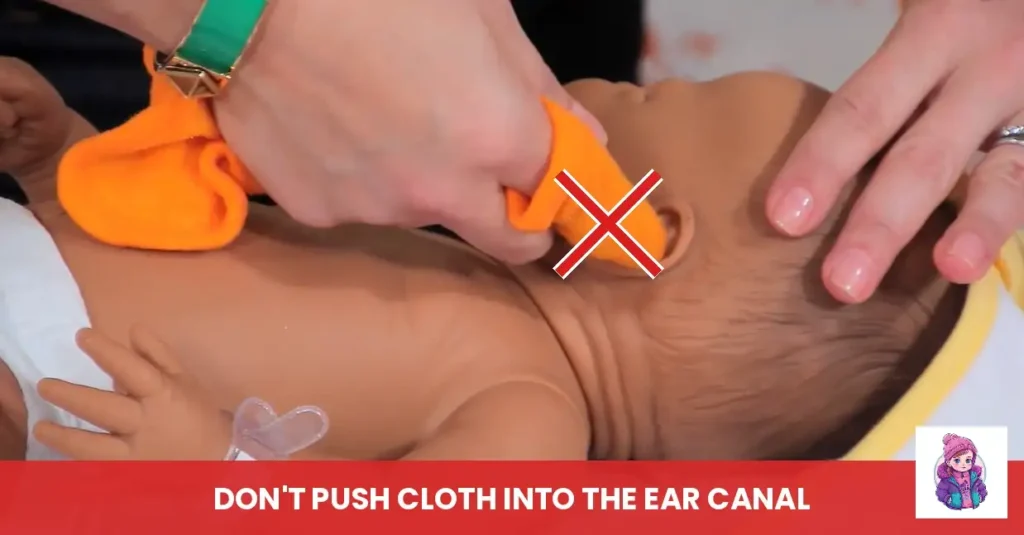
The same rule applies to ear candles, bobby pins, rolled tissue, or any other household item someone suggests as a workaround. None of them are safe substitutes, and all of them carry the same risk of pushing wax deeper or injuring the canal.
What Normal Baby Earwax Looks Like
Earwax color and texture vary a lot between babies, and almost all of that variation is normal. Brown, yellow, or even black coloring is common, and the texture can be sticky and moist or dry and flaky.
What earwax shouldn’t do is smell bad. An unpleasant odor, along with any yellow-green discharge, points toward something other than ordinary wax and is worth a call to your pediatrician.
When Earwax Becomes a Blockage
Occasionally wax builds up faster than it clears, especially in babies who produce more of it naturally. Signs of a possible blockage include your baby tugging or rubbing at their ear, visible wax that seems to be growing rather than falling away, or a caregiver noticing your baby doesn’t seem to respond to sound the way they normally do.
None of these are something to fix at home with drops or tools bought online. A blockage that’s actually affecting hearing or comfort needs a pediatrician or pediatric ENT, who can remove it safely with proper tools or prescribe drops designed for that purpose.
When to Call Your Pediatrician
A few signs point to something beyond routine wax and are worth a call.
- Yellow-green discharge from the ear
- A noticeably bad smell
- Your baby repeatedly tugging or pulling at one ear
- Signs your baby isn’t hearing well, like not startling at loud sounds
- Wax that appears to be blocking the ear canal entirely
Frequently Asked Questions
The Bottom Line
Cleaning infant ears comes down to doing less than most parents expect: a soft, damp washcloth on the outer ear during bath time, and nothing at all inside the ear canal. Earwax is doing its job even when you can see it, and the moment a cotton swab feels like the easier option is exactly the moment to put it down and call your pediatrician instead if something genuinely seems wrong.
This article is for general information and isn’t a substitute for medical advice. Always contact your pediatrician with specific concerns about your baby’s ears or hearing.

Newsletter Signup
Subscribe to our weekly newsletter below and never miss the latest product or an exclusive offer.