When to Move Baby to Their Own Room
Every grunt, squeak and rustle from the bassinet wakes you up, and you’re starting to wonder if your baby is waking because of you, too. The nursery is ready down the hall, but moving your baby there feels like a big, slightly scary step. Some friends did it at 2 months, others waited a year, and you’re not sure which is right. The American Academy of Pediatrics (AAP) recommends keeping your baby in your room, on their own separate sleep surface, for at least the first 6 months, when the risk of sudden infant death syndrome (SIDS) is highest. After that, the timing is up to your family. Here’s what the guidance says, what the research shows about sleep, the signs your baby is ready, and how to make the move go smoothly.
Talk to your pediatrician before moving your baby out of your room, especially before 6 months. Babies born early, babies with reflux, breathing problems or other health conditions, and babies who still need a lot of night care may need to stay close for longer. This guide is general. Your doctor knows your baby, so ask them rather than going by what a relative, a friend or an online thread says.
How Long Should Baby Sleep in Parents’ Room?
The AAP’s current safe sleep guidance, updated in 2022, recommends room sharing for at least the first 6 months. That means your baby sleeps in your bedroom, ideally close to your bed, but in their own crib, bassinet or play yard, never in your bed. The NHS gives the same advice in the UK, and the Lullaby Trust, a UK safe sleep charity, says it applies to daytime naps as well as nighttime sleep.
Many articles still say “ideally for a full year.” That came from the AAP’s older 2016 guidance. The 2022 update kept the 6-month minimum and dropped the one-year target, so moving your baby after 6 months fits current advice. Keeping them in your room longer is also fine, as long as they sleep on their own safe surface.
Room sharing matters most early on because most SIDS deaths happen between 1 and 4 months, and more than 90% happen before 6 months, according to NIH Safe to Sleep. The AAP has said room sharing can lower the risk of SIDS by as much as 50%. Experts think part of the reason is that babies sleep a little more lightly with parents nearby, and parents can hear and respond quickly.
| Baby’s age | Where your baby should sleep | Notes |
|---|---|---|
| Birth to 6 months | Your room, own crib or bassinet | AAP and NHS minimum for room sharing |
| 6 to 9 months | Your room or their own room | Many families move here, before separation anxiety peaks |
| 9 to 12 months and up | Your room or their own room | Fine either way. Moves can take a little longer at this age |
These ages are a general guide. Your pediatrician may advise a different plan for your baby.
Room Sharing vs Co-Sleeping vs Bed Sharing
These terms get mixed up a lot, so it helps to be clear. Room sharing means your baby sleeps in your room on a separate surface, and that’s what the AAP recommends. Bed sharing means your baby sleeps in your bed with you, and the AAP advises against it because it raises the risk of suffocation and sleep-related death. “Co-sleeping” is used for both, which is where the confusion comes from. If you’re moving your baby out of your bed rather than out of your room, the steps later in this guide still help, and your doctor can advise on the safest way to make that change.
Choosing the Right Time After 6 Months
So when should babies sleep in their own room once they’re past 6 months? There’s no single right age. Families make the move at very different ages, from 6 months to well past the first birthday. Many families aim for somewhere between 6 and 9 months for a few practical reasons.
- SIDS risk has dropped a lot by then.
- Your baby may have outgrown the bassinet and needs a full-size crib, which may not fit in your room.
- Separation anxiety often starts around 8 to 10 months, and a move before then can feel easier for some babies.
- You’re all waking each other up. Babies get more aware of sounds as they grow, and your noises can stir them too.
If you’re happy room sharing and everyone is sleeping, there’s no need to rush. The right time is when your baby is past the safe minimum and the move works for your family.
Is It Safe for a 4 Month Old to Sleep in Their Own Room?
The AAP’s guidance is at least 6 months, so a move at 4 months is earlier than recommended. Some families do move at 3 or 4 months, often because they aren’t sleeping at all, and one parent on Reddit said their pediatrician supported it because exhausted parents are more likely to pull a baby into an unsafe sleep spot. That’s a decision to make with your own doctor, not on your own.
Do Babies Sleep Better in Their Own Room?
Often, yes, at least after the first few months. A 2017 study published in Pediatrics followed first-time families and found that babies who were sleeping in their own room by 4 months had longer stretches of night sleep than those still room sharing. By 9 months, babies who had moved early were sleeping about 40 minutes more per night. The researchers also found that room sharing was linked with more parents bringing their baby into their own bed overnight, which isn’t safe.
Parents on Reddit report the same thing. One mom who moved her daughter at 5 months said night wake-ups dropped a lot within a month. Another said she couldn’t sleep through all the grunting, and once her baby was in the nursery, she could still hear whimpers on the monitor but not every rustle.
That said, the AAP didn’t change its 6-month advice after this study. Better sleep in the second half of the first year doesn’t outweigh the lower SIDS risk from room sharing in the first 6 months. A baby in deep, long sleep is also part of why experts are cautious with young infants. Lighter sleep with parents nearby is thought to be protective early on.
Signs Your Baby Is Ready for Their Own Room
Once your baby is past 6 months, these signs suggest the timing is good.
- Your pediatrician agrees your baby is growing well and healthy enough for the move.
- Your baby has outgrown the bassinet or is rolling over, pushing up on hands and knees, or near the weight limit. Our guide on how long a newborn can sleep in a bassinet covers the limits.
- Your baby sleeps longer stretches and needs fewer night feeds. A baby who still wakes every couple of hours may find the move harder than one who already sleeps a long stretch.
- You keep waking each other up. If your noises wake your baby, or theirs keep you up all night, everyone may sleep better apart.
- The nursery is close enough. If their room is far from yours, some doctors suggest waiting longer so you can get to your baby quickly.
Switching to a Crib at the Same Time
The switch from bassinet to crib and the move to the nursery often come together. That’s fine if your baby is past 6 months. If your baby outgrows the bassinet sooner, you can put a crib or a mini crib in your room for a while. One Reddit parent’s baby outgrew the bassinet at 3 months, so they used a pack and play in their room until 4.5 months, then moved to the nursery.
When Other Parents Made the Move
In a recent r/NewParents thread, a mom of a 12-week-old asked when other parents had moved their babies out. The answers covered almost every age.
- Several parents moved at around 4 to 6 months, often because the baby outgrew the bassinet or because they were all waking each other.
- A few moved much earlier, at 6 to 12 weeks, usually because their baby was already sleeping long stretches.
- Others waited until 9 to 10 months, or kept their baby close longer for health reasons. One mom kept her first baby in the room until 9 months because of reflux and choking episodes.
Many parents also said the same thing about the move itself. It was harder on them than on the baby. As one mom who moved her daughter at 5 months put it, she was heartbroken, but knew after the first night it was the right call.
These are personal stories, not guidance. The safest plan is still at least 6 months of room sharing unless your doctor advises otherwise.
How to Make the Move Smoothly
Once you’ve decided, a gradual, steady approach usually makes the change easier for everyone.
- Set up the nursery for safe sleep. Use a crib with a firm, flat mattress and a fitted sheet only. No bumpers, pillows, toys or blankets in the first year. Keep cords from blinds and monitors out of reach.
- Start with naps. Let your baby nap in the new crib for a few days or a week first.
- Spend awake time there. Play, read and change diapers in the nursery so the room feels familiar.
- Keep the bedtime routine the same. Bath, feed, book and song in the same order help your baby know sleep is coming, wherever they sleep.
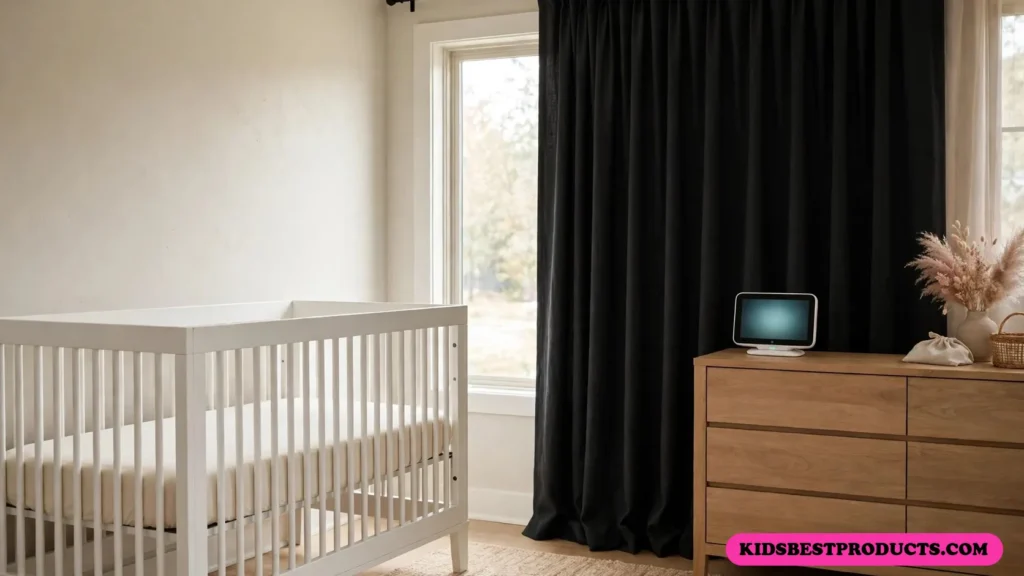
- Make the room sleep-friendly. Blackout curtains and white noise can help, especially if the nursery gets more light or noise than your room.
- Use a baby monitor. A simple audio or video monitor lets you hear and see your baby. Some parents keep the volume low so normal sleep sounds don’t wake them.
- Pick a calm week. Avoid moving your baby during illness, travel, a new daycare start or a sleep regression. Our guide to baby sleep regression ages explains when those tend to happen.
If your baby cries out in the night after the move, give it a moment before going in. Many babies stir and settle between sleep cycles. Our guide on baby crying in sleep explains what’s normal. If you’re still doing a late-evening top-up feed, a dream feed works just as well in the nursery.
What About Smart Monitors?
A video monitor is useful for peace of mind. Even so, the AAP says not to rely on home monitors or devices that claim to track breathing or oxygen to lower the risk of SIDS. If you use one, keep following every safe sleep rule anyway.
If Your Baby Has Been in Your Bed
If your baby has been sleeping in your bed, the move is a bigger change, since they’re used to falling asleep right next to you. Start by getting your baby used to their crib in your room, then move the crib to the nursery once that’s going well. Expect a few harder nights, and keep the routine the same each time.
How Long Does It Take Baby to Adjust?
Most babies settle into a new room within a few days to a week or two. Younger babies often adjust faster than older ones. If it really isn’t working, it’s fine to move your baby back to your room and try again in a few weeks.
Can Baby Share a Room With a Sibling?
Yes, once your baby is past the room sharing stage with you. The main question is whether your baby still wakes for night feeds or cries out often, since that can wake an older child. Some families wait until the baby sleeps through most of the night before moving them in with a brother or sister.
Frequently Asked Questions
The Bottom Line
Most babies should stay in your room for at least 6 months, according to the AAP, unless your doctor advises otherwise. After that, choose the time that works for your family, often between 6 and 9 months or when your baby outgrows the bassinet. Set up the nursery for safe sleep, start with naps, keep the routine the same and use a monitor. Many parents find the move is harder on them than on their baby, and that everyone sleeps better within a week or two. For the full safe sleep guidance, see the AAP’s safe sleep guide and the NHS page on reducing the risk of SIDS. Our guide on when babies can sleep on their stomach covers safe positions by age.
This article is for general information only. Every baby is different, and it can’t replace advice from a doctor who has examined your child. If you’re worried about your baby, contact your pediatrician or emergency services right away.

Newsletter Signup
Subscribe to our weekly newsletter below and never miss the latest product or an exclusive offer.