9 Month Sleep Regression, Separation Anxiety and Standing in the Crib
Your baby used to go down easily and sleep most of the night. Now the moment you lay them in the crib, they pull up to stand, hold the rail and cry for you. When you walk out of the room, it’s as if you’ve left for good. Some nights they wake at 2, 4 and 6 a.m. like clockwork. The 9 month sleep regression often comes at the peak of two big changes, separation anxiety and learning to stand. Both are healthy signs of development, but they can turn bedtime upside down for a few weeks. Here’s why it happens now, the signs to look for, how long it usually lasts and what helps your baby feel safe enough to sleep again.
Before calling it a regression, rule out illness. If your baby has a fever, ear pulling, congestion, vomiting, poor feeding, fewer wet diapers or crying that sounds like pain, call your pediatrician. This guide is general advice. Your doctor knows your baby, so check with them instead of waiting because a friend or relative says it’s just a phase.
Is There a 9 Month Sleep Regression?
It isn’t a medical diagnosis, and not every baby has one. Still, many babies sleep worse for a while around 9 months, and for many it’s the middle of a rough stretch that can start at 8 months and run to 10. What makes 9 months stand out is that separation anxiety is often at its strongest, and many babies are learning to pull up to stand.
What Is the 9-Month Crisis in Babies?
“9-month crisis” is a phrase you’ll see on social media, not a medical term. It usually describes a clingy, unsettled stage when a baby suddenly cries whenever their parent leaves, protests at bedtime and wakes more at night. That lines up closely with normal separation anxiety at this age.
Why Does the 9 Month Sleep Regression Happen?
Separation Anxiety Peaks
Crying when you leave is a milestone, not a problem. The CDC lists “reacts when you leave (looks, reaches for you, or cries)” among the things most babies do by 9 months. The CDC also lists “looks for objects when dropped out of sight,” which shows your baby now understands that things, and people, still exist when they can’t see them. So when your baby wakes between sleep cycles and you’re not there, they know you’re somewhere else, and they call for you. See the CDC’s milestones by 9 months for the full list.
Many babies also become shy or fearful around strangers at this age, which the CDC lists as a 9 month milestone too. A new babysitter or a busy family visit can make bedtime harder for a few days.
Pulling Up to Stand
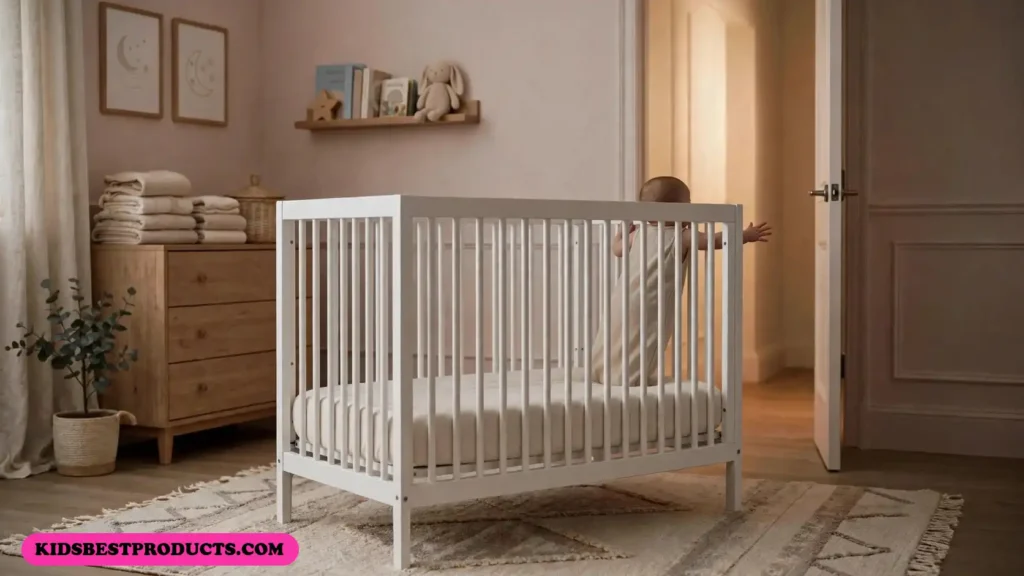
Around 9 months, many babies learn to pull up on furniture and the crib rails. The trouble is that they often figure out how to get up long before they learn how to get back down. A baby standing at the rail and crying at 2 a.m. may simply be stuck.
Too Little Awake Time Can Look Like a 9 Month Sleep Regression
Some 9-month-olds wake at night because their schedule hasn’t kept up with them. In one Reddit thread, a mom’s 9-month-old was waking at 2, 4 and 6 a.m. on three wake windows of 3 hours each. Several parents pointed out that 9 hours awake is usually not enough at this age and suggested starting with about 3, 3 and 4 hours. Our 8 month sleep regression guide explains how to add awake time step by step.
Teething and New Skills
Teeth, crawling, babbling and early cruising along furniture all add to a busy, excited brain at bedtime.
9 Month Sleep Regression Signs
- Crying as soon as you leave the room at bedtime or nap time
- Standing in the crib and crying, unable to get back down
- Waking at night and only settling when they see you
- Waking at the same times each night
- Clinginess during the day, especially with new people
- Fighting naps or bedtime
- Early morning waking
Why is my 9 month old suddenly not sleeping? If your baby is healthy and several of these signs appeared together, separation anxiety, standing and a schedule that needs adjusting are the most likely reasons.
How Long Does the 9 Month Sleep Regression Last?
Usually 2 to 6 weeks. Standing-related wake-ups often fade within a week or two once your baby learns to get back down. Separation anxiety can come and go for longer, but nights usually settle once your baby trusts the bedtime routine. When does it end? For most babies, once they’re confident standing and sitting down, and their schedule fits their age.
How to Deal With the 9 Month Sleep Regression
Teach Your Baby to Get Back Down
Practice during the day. When your baby pulls up on the couch or a low table, gently bend their knees and help them sit, and make it a game. Most babies learn within a week or two. At night, if your baby is standing and crying, lay them down once, calmly, then step back and give them a chance to settle. Laying them down over and over can turn into a game.
Lower the Mattress
Before or as soon as your baby starts pulling up, move the crib mattress to the lowest setting so they can’t climb or fall out. Keep the crib bare. Our guide on when to move baby from bassinet to crib covers crib safety checks.
Ease Separation Anxiety During the Day
- Play peekaboo and simple hide-and-seek games, so your baby practices “gone and back again.”
- Leave the room for short moments while talking to your baby, then come back.
- Say a short, cheerful goodbye instead of sneaking out. Sneaking away can make babies more watchful.
- Give extra cuddles and one-on-one time before bed.
Keep Bedtime Predictable
A calm routine in the same order every night tells your baby what’s coming next. Try ending the routine in the same spot with the same words, such as a short song and “goodnight, I love you.” Predictable endings help babies feel safe letting you go.
Respond the Same Way Every Time
When your baby wakes and calls for you, wait a minute or two. If they don’t settle, go in with a calm, brief check. Pat, shush, say your goodnight phrase and leave. Being consistent shows your baby that you always come back, which is exactly what separation anxiety needs. Our guide on baby crying in sleep explains when to wait and when to help.
Hold Off on a Lovey for Now
Soft toys and lovies should stay out of the crib until 12 months. Our guide to the baby lovey explains when and how to introduce one.
Check the Schedule
Most 9-month-olds still need two naps. Many do well with about 3 to 4 hours of awake time between sleeps. Our 9 month sleep schedule has sample days.
Keep Sleep Safe Even When You’re Exhausted
It’s tempting to bring a clingy baby into your bed. The AAP advises against bed sharing in the first year. If your baby rolls or crawls into a tummy-down position, that’s fine since they move on their own, but always place them on their back to start. See the AAP’s safe sleep guide and our guide on when babies can sleep on their stomach.
8-9 Month or 9-10 Month Sleep Regression?
Regressions blur together. If your baby’s trouble started at 8 months and seems mostly about wake-ups and early mornings, see the 8 month sleep regression guide. If it’s starting at 10 months with nap refusal and early walking, see the 10 month sleep regression guide.
When to Call Your Pediatrician
Call your doctor if sleep problems come with signs of illness or last more than about 6 weeks. Also talk to your doctor if your baby isn’t reaching 9 month milestones, such as sitting without support, looking when you call their name, babbling sounds like “mamama,” or reacting when you leave, or if they’ve lost skills they had before. The CDC says not to wait if you’re concerned.
Frequently Asked Questions
The Bottom Line
The 9 month sleep regression is often driven by peak separation anxiety and learning to pull up to stand, sometimes with a schedule that needs more awake time. Most rough patches pass within a few weeks. Practice getting back down during the day, lower the mattress, play separation games, keep bedtime predictable, respond the same way every time, and call your pediatrician if your baby seems unwell or isn’t reaching milestones.
This article is for general information only. Every baby is different, and it can’t replace advice from a doctor who has examined your child. If you’re worried about your baby, contact your pediatrician or emergency services right away.

Newsletter Signup
Subscribe to our weekly newsletter below and never miss the latest product or an exclusive offer.