Cradle Cap Brush: Does It Work and Which One to Choose?
Those yellowish flakes on your baby’s scalp look like they’d lift right off with a fingernail, and the urge to pick at them during a feed is hard to ignore. Then you find a whole shelf of tiny silicone brushes promising to fix it, and you start wondering whether any of them do more than move flakes around. A cradle cap brush can help, but only when it’s doing the specific job it was designed for. Here’s what that job is, which type is worth buying, and how to use one without irritating your baby’s skin.
A cradle cap brush works, but it doesn’t cure cradle cap. It lifts scales that have already been softened by oil and shampoo, which is why the routine matters more than the brush itself. Soften the scales with a little mineral oil, baby oil, or petroleum jelly, shampoo, then brush gently in small circles while the hair is still lathered. Use a soft silicone brush for most babies, skip olive oil, and never pick at the flakes. Most cradle cap clears up on its own somewhere between 6 and 12 months.
What Cradle Cap Is and Why It Happens
Cradle cap is the common name for infantile seborrheic dermatitis. It shows up as greasy or dry, yellow to white scales on the scalp, usually starting somewhere between three weeks and two months after birth. It’s very common, and the American Academy of Pediatrics notes it affects roughly 70% of babies by three months old.
Nobody knows the exact cause. The leading theories point to extra oil production in the scalp, possibly driven by hormones passed from the mother before birth, and a reaction to a yeast called Malassezia that lives on everyone’s skin. It isn’t caused by poor hygiene or an allergy, it isn’t contagious, and it doesn’t itch or hurt your baby, even when it looks rough.
Do Cradle Cap Brushes Actually Work?
Yes, for one specific part of the job. A brush is good at lifting scales that have already been loosened, and it does that more evenly and gently than fingers or a washcloth. What it can’t do is treat whatever is driving the cradle cap in the first place, so the scales tend to come back until the condition settles on its own.
The brush also works much better as one step in a routine than as a tool on its own. Brushing dry, stuck-on flakes mostly drags on the skin underneath, which can leave it red and irritated. Softening the scales first with oil and shampoo is what lets the brush lift them away without force.
Which Type of Brush Works Best for Cradle Cap?
Most products fall into one of five groups, and each one suits a different stage of cradle cap.
Cradle cap brush types compared: what each one is best for
| Type | Best for | Watch out for |
|---|---|---|
| Silicone brush with soft nubs Best start | Most babies; lifting softened scales during the bath | Replace it if the silicone tears or gets sticky |
| Soft bristle brush | Light flaking and loosening scales after the bath | Bristles trap flakes, so it needs regular cleaning |
| Fine-tooth comb | Lifting a few stubborn scales that are already loose | Easy to scrape skin; never use it on dry flakes |
| Sponge or scrubber | Very young babies and sensitive skin | Less effective on thick patches |
| Soft goat-hair baby hair brush | Everyday grooming once cradle cap clears | Too soft to lift thick scales |
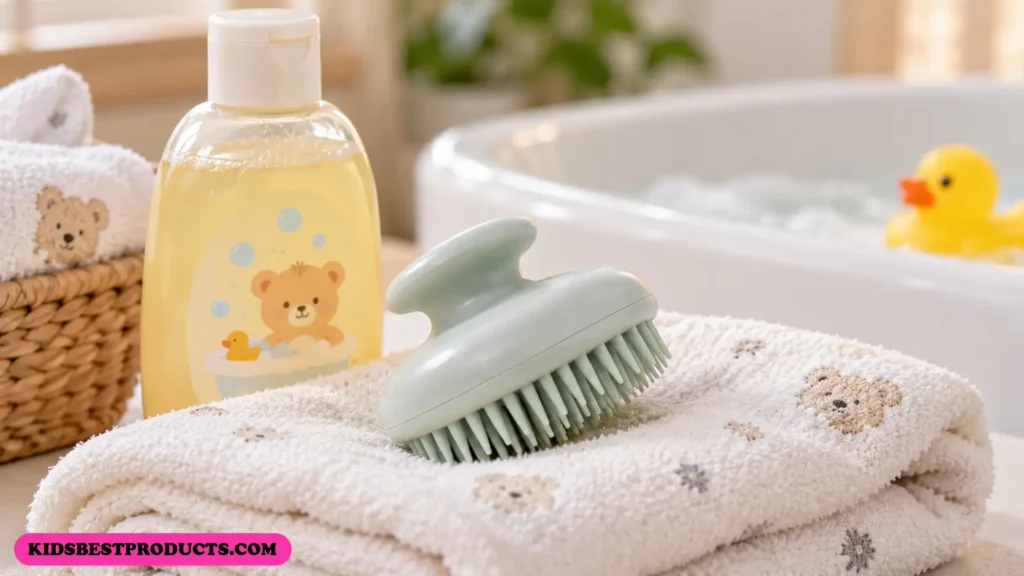
For most parents, a soft silicone brush is the safest place to start. It’s gentle, easy to rinse, and works well with shampoo lather. A comb is worth having only for the occasional thick patch, and only after the scales have been softened.
Is a Regular Baby Hair Brush Enough?
A standard baby hair brush with soft goat-hair bristles is made for smoothing fine hair, not for lifting scales. It can help with very light flaking and is nice for daily grooming once the scalp clears, but on thicker cradle cap it mostly glides over the top. If you only want to buy one tool while cradle cap is active, a silicone brush does more of the work.
How to Use a Cradle Cap Brush, Step by Step
The routine below follows the approach recommended by pediatric and dermatology sources, including the American Academy of Dermatology.
- Rub a small amount of oil into the scaly areas and leave it for at least 15 minutes. For tough scales, the AAP says it can stay on overnight.
- Wet your baby’s hair with warm water and wash with a mild, fragrance-free baby shampoo.
- While the hair is still lathered, brush in small, gentle circles over the scaly patches for a few minutes. Seattle Children’s suggests about five minutes of gentle massage.
- Rinse thoroughly, making sure all the oil is gone. Oil left on the scalp can make cradle cap worse.
- Pat the scalp dry and let any remaining flakes come away on their own over the next few days.
If a scale doesn’t lift with light pressure, leave it for the next bath. Pressing harder is how scalps end up red and irritated.
Which Oil to Use Before Brushing, and Which to Skip
Sources agree on a short list of safe options. Mineral oil, baby oil, and petroleum jelly are the most commonly recommended, and the AAP also lists coconut oil. The American Academy of Dermatology specifically suggests a non-food oil.
Olive oil is the one to avoid. Seattle Children’s notes it may encourage the growth of the yeast linked to cradle cap, and Cleveland Clinic also advises against it. Cleveland Clinic warns against peanut oil too, because of allergy risk.
How Often to Brush
Brushing every time you wash the hair is usually enough. Dermatologists and the AAP suggest shampooing every other day while cradle cap is active, so brushing during those washes fits naturally. A quick, gentle brush on non-wash days is fine too, as long as the scalp isn’t getting red.
Cradle Cap Brush Mistakes to Avoid
- Brushing dry, unsoftened scales
- Scrubbing hard or going over the same patch again and again
- Picking or peeling flakes with fingernails, which can open the skin and lead to infection
- Leaving oil on the scalp after the bath
- Using a fine-tooth comb before the scales have been softened
Cradle Cap Brushes Worth Considering
You don’t need an expensive brush, since most of the result comes from the routine. These are a few well-known options that show up again and again in parent reviews.
Safety 1st Cradle Cap Brush and Comb. One side has soft rubber bristles and the other a fine-tooth comb, which makes it useful when you want a comb on hand for the occasional stubborn patch.
Frida Baby DermaFrida FlakeFixer. A three-step set with a sponge, a brush, and a comb, built around the soften, lift, and comb routine. It suits parents who want everything in one kit.
Haakaa Silicone Shampoo Brush. A simple, all-silicone brush that is easy to rinse clean, a good pick if you just want one gentle tool for bath time.
Scalp Scrubbie. A two-in-one design that combines a sponge with soft bristles, which works well with shampoo lather on sensitive scalps.
Whichever one you choose, look for soft, flexible bristles or nubs, a handle small enough to hold steadily in one hand, and a material you can clean easily.
Keeping the Brush Clean
Flakes and oil build up quickly, especially on bristle brushes. Rinse the brush after every use, wash it with warm soapy water once or twice a week, and let it dry completely before the next bath. Replace silicone brushes that tear or turn sticky, and bristle brushes that start shedding.
When to Call Your Pediatrician
Most cradle cap is harmless and needs nothing more than the routine above. Call your pediatrician if you notice any of these.
- The patches become crusted, weepy, or develop pus bumps
- There’s a bad smell, bleeding, oozing, or swelling
- Your baby seems uncomfortable or itchy
- The rash spreads to the face, behind the ears, or other parts of the body
- It isn’t improving after a few weeks of home care, or it lasts past 12 months
- A baby under one month old develops clusters of tiny blisters or pimples
Your pediatrician may suggest a medicated or anti-dandruff shampoo for stubborn cases. Check with them before using one, since they aren’t all suitable for young babies.
Frequently Asked Questions
The Bottom Line
A cradle cap brush is a useful tool, just not a cure. Soften the scales with a safe oil, shampoo, then brush gently while the hair is lathered, and rinse all the oil away. A soft silicone brush suits most babies, olive oil is best skipped, and picking is never worth it. Give the routine a few weeks, and call your pediatrician if the scalp looks infected or the rash starts spreading.
This article is for general information and isn’t a substitute for medical advice. Talk to your pediatrician about any rash, scaling, or skin change that worries you.

Newsletter Signup
Subscribe to our weekly newsletter below and never miss the latest product or an exclusive offer.