Safe Teething Remedies for Babies and the Ones to Skip
Your baby has been chewing on everything, drooling through bib after bib, and waking up crying at night. You want to help, but every friend, forum and shop shelf seems to suggest something different. The good news is that the safest teething remedies for babies are also the simplest: rubbing their gums with a clean finger, giving them a firm rubber teether chilled in the fridge, and plenty of extra cuddles. If your baby is still very uncomfortable, a pain reliever your pediatrician approves can help for a day or two. Below you’ll find what works at each age, what helps at night, how teething differs from illness, and the popular products the FDA says you should never use.
Call your pediatrician first if your baby has a temperature of 100.4°F (38°C) or higher, diarrhea, vomiting, a rash on the body, or cries in a way you can’t settle, or if you’re thinking about giving any medicine. Teething doesn’t cause these symptoms, so something else may be going on. Don’t wait because a relative says “it’s just teeth.” Only your baby’s doctor can check.

Safe Teething Remedies at a Glance
| Remedy | From what age | How to do it |
|---|---|---|
| Gum massage | Any age | Wash your hands and rub the sore gums with a clean finger or wet gauze for about two minutes |
| Solid rubber teething ring | Any age | Chill it in the fridge, not the freezer, and choose one without liquid inside |
| Cold, damp washcloth | Any age | Twist a clean wet cloth, chill it, and let your baby chew on it |
| Extra feeds and cuddles | Any age | Sucking and closeness comfort many teething babies |
| Cold water in a sippy cup | 6 months and up | Many soft spouts double as something to chew |
| Chilled soft fruit in a mesh feeder | 6 months and up if eating solids (NHS); Mayo Clinic suggests after 12 months | Use soft fruit like melon or banana and stay with your baby |
| Ice wrapped in a wet cloth, rubbed on gums | Over 12 months | Never let your baby chew ice directly |
| Pain reliever | Ask your pediatrician | Acetaminophen, or ibuprofen from 6 months in the US |
Safe teething remedies for babies by age, based on Mayo Clinic, AAP, NHS and Texas Children’s guidance.
Natural Teething Remedies for Babies That Work
When parents search for natural teething remedies for babies, they usually want something drug-free and gentle. The good news is that the options doctors recommend first are exactly that.
Gum massage. Mayo Clinic suggests using a clean finger or wet gauze to rub your baby’s gums for two minutes, as often as you need to. The pressure eases the ache. The AAP adds that letting your baby gnaw on your clean finger can be especially comforting at nap time or when they wake at night.
A firm, chilled teether. Choose a solid rubber or silicone teething ring in one piece, with no small parts. Chill it in the fridge for the time the instructions suggest. Avoid liquid- or gel-filled teethers, which can split if your baby bites through them. Our guide to the best baby toys for teething relief compares popular options.
A cold washcloth. Wet a clean washcloth, twist it, and chill it. Tying a knot in one end gives your baby something firm to gnaw on.
Feeding and comfort. Breastfeeding, a bottle, a cuddle or a distracting game can all ease the discomfort for a while. If your baby is reluctant to breastfeed because their gums hurt, Mayo Clinic suggests offering breast milk from a cup, spoon or syringe for a short time.
Chilled soft foods. For babies who already eat solids, the NHS suggests soft fruit like melon to soothe gums from 6 months. A baby fruit feeder, the mesh or silicone kind, lets your baby gnaw on chilled soft fruit with less risk of choking. Avoid hard raw pieces like carrot sticks, and always stay with your baby while they eat.
Should Cold Teething Remedies for Babies Go in the Fridge or Freezer?
This is one point where trusted sources don’t agree, so it’s worth knowing the details. Mayo Clinic, the NHS and Texas Children’s all say to chill teethers and washcloths in the fridge and not to freeze them, because a frozen, very hard object can hurt or even give frostbite to tender gums. The AAP says you can put a twisted, damp washcloth in the freezer, but warns not to let your baby chew on anything frozen solid.
The safe middle ground is to use the fridge for teething rings, and if you chill a washcloth in the freezer, take it out while it’s still cold and soft rather than rock hard.
Teething Remedies for Babies at Night
Teething often seems worse at night, when there’s nothing to distract your baby. The AAP suggests a few ways to help.
- Keep the bedtime routine calm. A warm bath and a gentle massage can help your baby wind down.
- Use soft white noise. Keep it at a low volume and well away from the crib so it doesn’t harm your baby’s hearing.
- Offer your finger to gnaw on when you put your baby down or when they wake.
- Give a chilled teether before bed, not in the crib. Take it out before your baby falls asleep, since the crib should stay bare.
- Ask about a nighttime dose. The AAP says that if your baby is very uncomfortable, a nighttime dose of acetaminophen might help them settle, as long as your pediatrician agrees.
If your baby wakes up screaming, won’t settle with your usual comfort, or seems unwell, don’t assume it’s teething. Check their temperature and call your doctor if you’re worried.
Teething Remedies by Age
Most babies get their first tooth between 6 and 10 months, according to the AAP, but discomfort can start weeks or months earlier, sometimes as early as 3 months.
Around 3 to 5 months. Stick to gum massage, a chilled rubber teether and extra feeds. Don’t give any medicine without asking your pediatrician first, and call the doctor before giving anything to a baby under 12 weeks.
6 to 12 months. Everything above, plus cold water in a sippy cup and, if your baby eats solids, chilled soft food in a mesh or silicone feeder.
Over 12 months. Mayo Clinic suggests that after the first birthday you can rub the gums with a piece of ice wrapped in a wet cloth. The first molars, which are bigger teeth, usually come through between about 13 and 19 months, so a firmer teether that reaches the back of the mouth can help.
Medicine for Teething Pain
If simple remedies aren’t enough, a pain reliever made for babies may help.
- Acetaminophen (Tylenol). Ask your pediatrician for the right dose, which depends on your baby’s weight, not just their age.
- Ibuprofen (Advil, Motrin). In the US, doctors use it from 6 months, as Boston Children’s notes. The NHS in the UK allows paracetamol from 2 months and ibuprofen from 3 months, so advice differs between countries. Follow your own doctor’s guidance.
- Keep it short. Mayo Clinic advises stopping after 1 to 2 days, since longer use can harm the liver or kidneys.
- Never use aspirin for children, and never rub aspirin or alcohol on the gums.
Is It OK to Give Tylenol Every Night for Teething?
Not without your pediatrician’s advice. The AAP says moderate use of acetaminophen is considered safe and a nighttime dose might help, but frequent use can cause health problems. Mayo Clinic suggests stopping after a day or two. If your baby seems to need medicine night after night, ask your doctor whether something other than teething is going on.
Teething Remedies to Avoid
Some of the most popular teething products are the ones health experts warn against most strongly.
- Numbing gels with benzocaine or lidocaine. The FDA warns that benzocaine products such as Orajel and Anbesol shouldn’t be used for teething, because they can cause methemoglobinemia, a rare but serious condition that lowers oxygen in the blood. Prescription lidocaine has been linked to seizures and heart problems.
- Amber, wooden or silicone teething necklaces and bracelets. The FDA has reports of babies choking and being strangled by them.
- Liquid-filled teethers. They can leak or split, leaving sharp edges.
- Alcohol on the gums. It’s absorbed quickly and can cause seizures.
- Rock-hard frozen items, ice cubes and frozen pops. They can bruise or freeze delicate gums.
- Honey, or teethers dipped in sugar or syrup. Never give honey before 12 months because of the risk of infant botulism, and sugary dips can cause tooth decay.
- Essential oils such as clove oil. Some blogs suggest them, but none of the health bodies we checked recommend them for babies.
- Hard raw vegetables like carrot sticks. These are a choking risk.
Are Homeopathic Teething Remedies Safe?
No. The FDA says homeopathic teething tablets and gels offer little to no benefit and carry serious risks. Some have contained much more belladonna, also called deadly nightshade, than the label claimed, which can cause seizures and breathing problems. The AAP also warns against products with belladonna or coffea cruda. Products labelled “natural” or “homeopathic” are not automatically safe for babies.
Is It Teething or Something Else?
Teething can cause drooling, chewing, fussiness, a rash around the mouth from drool, and swollen or tender gums. Texas Children’s also lists rubbing the cheeks or pulling at the ears, poorer appetite and trouble sleeping.
According to the AAP and Texas Children’s, teething does not cause any of the following.
- A fever of 100.4°F (38°C) or higher
- Diarrhea or vomiting
- A rash on the body, including diaper rash
- Cold symptoms or a persistent cough
- Crying that won’t stop
If your baby has any of these, contact your pediatrician. They’re much more likely to be a sign of illness than a new tooth.
Can Teething Cause a Fever?
No. Teething may cause a slight rise in temperature, but not a true fever. The AAP calls fever a false sign of teething, and Mayo Clinic says to call your baby’s doctor if their rectal temperature reaches 100.4°F (38°C). For a baby under 3 months, any fever needs a call to the doctor straight away.
How Long Teething Lasts
Teething comes and goes as each tooth comes through. Texas Children’s says each episode usually lasts about 3 to 8 days per tooth, and most children have all 20 baby teeth by about age 3.
| Age | Teeth likely to come through |
|---|---|
| 4 to 7 months | 2 bottom front teeth |
| 8 to 12 months | 2 top front teeth |
| 9 to 13 months | 2 top lateral incisors, next to the front teeth |
| 10 to 16 months | 2 bottom lateral incisors |
| 13 to 19 months | 4 first molars |
| 16 to 23 months | 4 canines |
| 23 to 33 months | 4 second molars |
Teething chart from Texas Children’s. Some babies get teeth earlier, later or in a different order, and that’s normal.
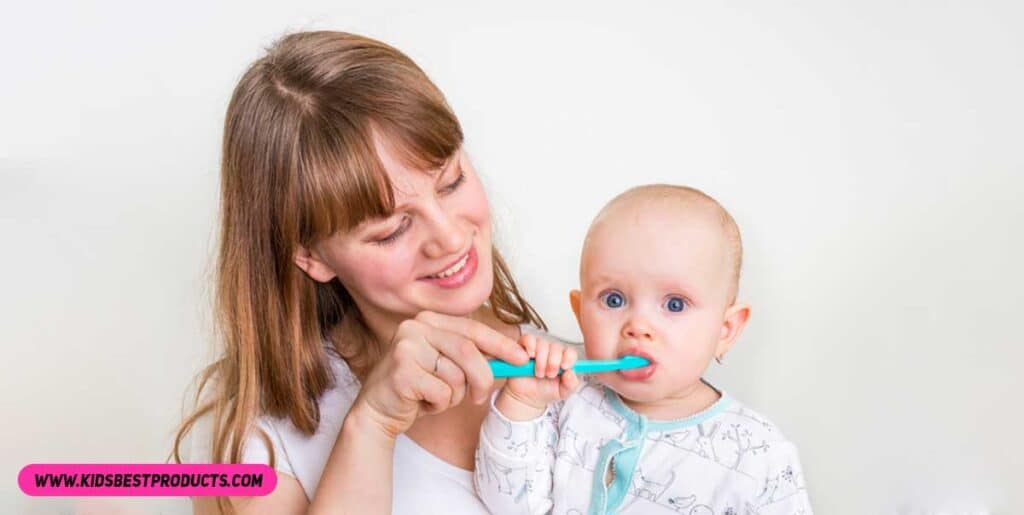
Once the first tooth appears, brush it twice a day with a smear of fluoride toothpaste about the size of a grain of rice, and book your baby’s first dental visit around their first birthday.
When to Call Your Pediatrician
Most teething can be managed at home. Call your baby’s doctor if your baby has any of these signs.
- A fever, diarrhea or vomiting
- Crying a lot, or can’t be comforted
- Trouble feeding, drinking or sleeping
- Symptoms that get worse or last more than a few days
- Pain in a baby under 3 months old
Frequently Asked Questions
The Bottom Line
Most babies get through teething with gentle help: a clean finger on sore gums, a chilled rubber teether, a cold washcloth and lots of comfort. Keep teething remedies for babies simple, and skip numbing gels, homeopathic products and teething jewelry. If your baby has a fever, diarrhea or can’t be settled, call your pediatrician, because those signs point to something other than a new tooth.
This article is for general information only. Every baby is different, and it can’t replace advice from a doctor who has examined your child. If you’re worried about your baby, contact your pediatrician or emergency services right away.

Newsletter Signup
Subscribe to our weekly newsletter below and never miss the latest product or an exclusive offer.