When Can Babies Sleep on Their Stomach?
You laid your baby down on their back, and an hour later the monitor shows them face down on the mattress. Your heart jumps. Do you flip them over or leave them? Plenty of babies sleep on their stomach the moment they learn to roll, and that’s exactly when the worry, and the conflicting advice, begins.
Here’s what pediatricians say. Once your baby can roll from back to tummy and from tummy to back on their own, usually between 4 and 6 months, it’s safe to let them sleep on their stomach. Before that, gently turn them onto their back whenever you find them on their tummy. Until their first birthday, every nap and every night should still start on their back. Below, you’ll find what to do at each stage and why back sleeping matters so much early on.

If you’re unsure about anything in your baby’s sleep, talk to your pediatrician first. This guide follows the American Academy of Pediatrics’ safe sleep guidance, but your doctor knows your baby. If your baby was born early, has a medical condition, or has trouble rolling or holding up their head, ask your pediatrician before following any general advice, including from friends, family or forums.
At What Age Can Babies Sleep on Their Stomach?
The honest answer is that it depends on rolling, not on a birthday. The real milestone is rolling both ways on their own. Age only tells you roughly when that tends to happen.
| Age (roughly) | What your baby can do | What to do |
|---|---|---|
| Birth to 3 months | Can’t roll yet | Always place on back. If you ever find them on their tummy, turn them onto their back |
| 3 to 4 months | Starting to roll, often one way only | Stop swaddling. Place on back. If they roll onto their tummy but can’t roll back, gently turn them over |
| 4 to 6 months | Many roll both ways | Place on back. If they roll onto their tummy and can roll back on their own, you can leave them |
| 6 to 12 months | Rolls, sits, moves around the crib | Place on back. Let them settle in any position they choose |
| After 1 year | Toddler | Back sleeping guidance covers babies up to their first birthday |
Every baby develops on their own timeline. Some roll both ways at 3 months, others closer to 7. Go by what your baby can do, not by the calendar.
The American Academy of Pediatrics (AAP) says babies should be placed on their backs for all sleep, naps and nights, until age 1. It also says that once a baby can roll both ways comfortably, you don’t need to keep turning them back. The NHS in the UK gives the same advice. See the AAP’s parent guide to safe sleep and the NHS page on reducing the risk of SIDS.
Why Back Sleeping Matters So Much Early On
Young babies who sleep on their stomachs have a higher risk of sudden infant death syndrome (SIDS) and suffocation. There are a few reasons.
- Rebreathing. Face down, a baby can breathe back in the air they just breathed out, which is lower in oxygen and higher in carbon dioxide.
- Weak neck control. Young babies can’t reliably lift or turn their head if their nose and mouth are pressed into the mattress.
- Deeper sleep. Babies on their tummies tend to sleep more deeply and wake less easily, and researchers think that reduced ability to rouse is part of the risk.
- Timing. According to NIH Safe to Sleep, most SIDS deaths happen between 1 and 4 months, and more than 90% happen before 6 months. That’s the same window before most babies can roll both ways.
The back sleeping advice started with the US Back to Sleep campaign in 1994, now called Safe to Sleep. In the years that followed, far more babies were placed on their backs, and SIDS rates fell by about half. In an r/NewParents thread, one parent whose mother had been told to use tummy sleeping in the early 1990s summed up why the advice changed: “because babies die and we know better.”
What About Newborns?
A newborn should never be placed on their stomach to sleep, for naps or overnight. They can’t lift or turn their heads well yet, and they’re in the highest-risk age for SIDS. Several parents in the Reddit threads said their newborn seemed to sleep better on their tummy. That’s real, but it doesn’t make it safe at this age.
Naps vs. Nighttime
The rule is the same for both. Once your baby rolls both ways on their own, they can stay on their tummy at night too. Some parents feel calmer seeing it during daytime naps first, but there’s no separate, later age for overnight sleep.
When Your Baby Starts Rolling in Their Sleep
Rolling usually begins around 3 to 4 months, and many babies try it in the crib before they’ve mastered it on the floor.
Rolling One Way Only
Many babies learn to roll from back to tummy before they can roll back. If your baby ends up on their stomach and can’t get back, gently turn them over. It’s tiring. Some parents in an r/beyondthebump thread said they were flipping their baby 10 to 15 times a night for a week or two. The best way to shorten this stage is plenty of supervised floor time during the day, so your baby can practice rolling both ways.
Rolling Both Ways
Once your baby can roll from tummy to back as well, let them choose their position. Keep laying them down on their back at the start of every sleep. Most parents in that thread described the same pattern: scary at first, then a few nights of their baby waking up upset on their tummy, and then better sleep than before.
Tummy Sleeping at 4, 5 and 6 Months
At 4 months, many babies can only roll one way, so you’d still turn them back. By 5 months, if your baby rolls onto their stomach in their sleep and can roll back without help, they can stay there. If they’re only rolling one way so far, keep turning them back and give them extra tummy time to practice. Most 6-month-olds who end up on their stomach got there themselves and can roll back, and that’s fine. If your baby is 6 months old and not rolling at all yet, mention it at the next checkup.
Is Side Sleeping Any Safer?
No. The AAP says side sleeping isn’t safe either, because a baby on their side can easily tip onto their tummy. Our guide on whether babies can sleep on their side explains this in detail.
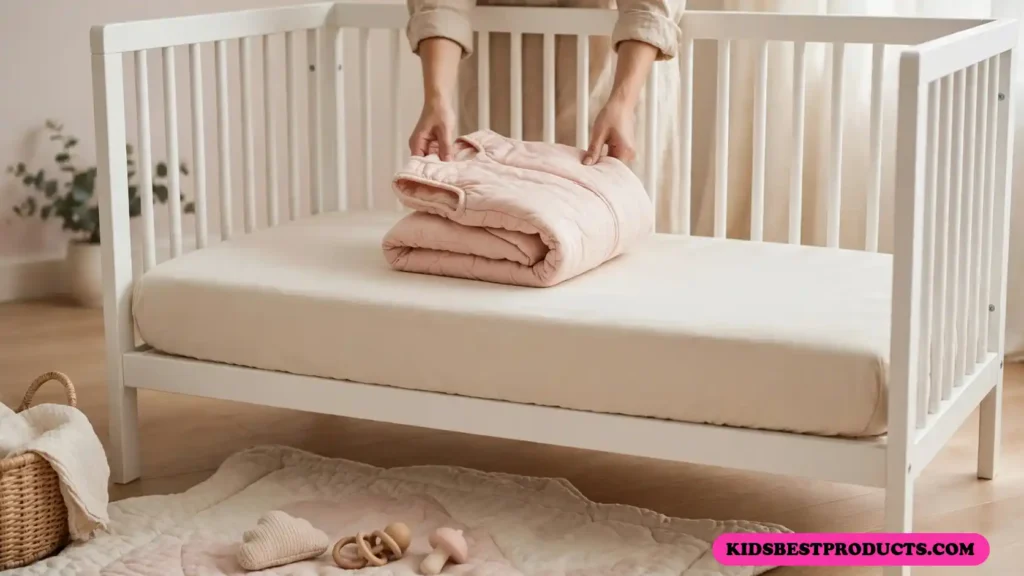
Setting Up a Safe Crib for a Rolling Baby
Once your baby starts choosing their own position, the sleep space does more of the safety work.
Firm, flat mattress. It shouldn’t dent when your baby lies on it. Use only a fitted sheet made for that mattress. See how many crib sheets you need.
Nothing else in the crib. No pillows, blankets, bumpers or soft toys. For when that changes, see when a baby can sleep with a blanket.
Stop swaddling. The AAP says to stop swaddling as soon as your baby looks like they’re trying to roll. A swaddled baby who rolls onto their tummy can’t use their arms to push up. A sleeveless sleep sack keeps them warm instead.
No positioners or wedges. Products that claim to keep babies on their backs or sides aren’t safe. One Reddit parent noted that using a positioner to stop her baby rolling would have been “way more dangerous” than letting her roll.
Keep your baby close. The AAP recommends sharing a room, but not a bed, for at least the first 6 months. A bedside bassinet or crib in your room makes checks easier.
Don’t rely on a monitor. Smart sock or breathing monitors haven’t been shown to prevent SIDS, and the AAP advises against using them to lower SIDS risk. They’re not a reason to put a young baby on their tummy.
What If You’re Watching, or Baby’s on Your Chest?
Watching doesn’t make tummy sleeping safe for a baby who can’t roll both ways. It’s easy to doze off or look away, and a young baby can get into trouble quietly. Tummy time while your baby is awake and you’re right there is different, and it’s encouraged. If your baby falls asleep during tummy time, turn them onto their back.
Babies also love falling asleep on a parent’s chest, and that’s fine while you’re fully awake. The risk comes if you might fall asleep too, especially on a sofa or armchair, where the AAP says the risk of sleep-related death is much higher. If you feel drowsy, move your baby onto their back in their own crib or bassinet.
Do Babies Really Sleep Better on Their Tummy?
Often, yes. Many babies startle less and sleep longer on their tummies, which is why so many tired parents are tempted. Plenty of parents in the Reddit threads said their baby slept “so much better” once they started rolling over. The catch is that this deeper, harder-to-rouse sleep is thought to be part of what makes tummy sleeping risky for young babies. Once your baby can roll both ways, they’ll find their own comfortable position anyway.
Choking and Flat Heads: The Two Big Worries
Neither is a reason to switch to tummy sleeping.
Choking. Healthy babies don’t choke more on their backs. Babies have a gag reflex and airway anatomy that protect them, and the AAP says even babies with reflux should sleep flat on their backs unless a doctor says otherwise for a specific medical reason.
Flat spots. Back sleeping can cause a flat spot on the back of the head, but the AAP says it usually rounds out as babies grow and sit up. To help, alternate which end of the crib your baby’s head faces, change their position while awake, and limit time in car seats, swings and bouncers outside of travel. If your baby always turns their head to one side, ask your pediatrician to check for tight neck muscles (torticollis).
Tummy Time: Stomach Time While Awake
Your baby should spend time on their tummy every day, just not while sleeping. Tummy time builds the neck, shoulder and arm strength they need to roll both ways, which is the milestone that makes stomach sleeping safe.
According to the AAP’s tummy time guidance, you can start the day your baby comes home. Begin with 3 to 5 minutes, 2 to 3 times a day, and build up to a total of 15 to 30 minutes a day by around 7 weeks. Do it on a firm surface while your baby is awake and you’re right there.
Frequently Asked Questions
The Bottom Line
Tummy sleeping isn’t about reaching a certain birthday. It’s about your baby being able to roll both ways on their own, which for most happens between 4 and 6 months. Until then, turn them onto their back when you find them on their stomach. At every age up to 1, lay them down on their back, keep the crib bare and flat, and stop swaddling once rolling starts. After that, let them choose, and try to get some sleep yourself.
This article is for general information only. Every baby is different, and it can’t replace advice from a doctor who has examined your child. If you’re worried about your baby, contact your pediatrician or emergency services right away.

Newsletter Signup
Subscribe to our weekly newsletter below and never miss the latest product or an exclusive offer.