Mini Crib vs Crib: How Big Each One Is and Which You Need
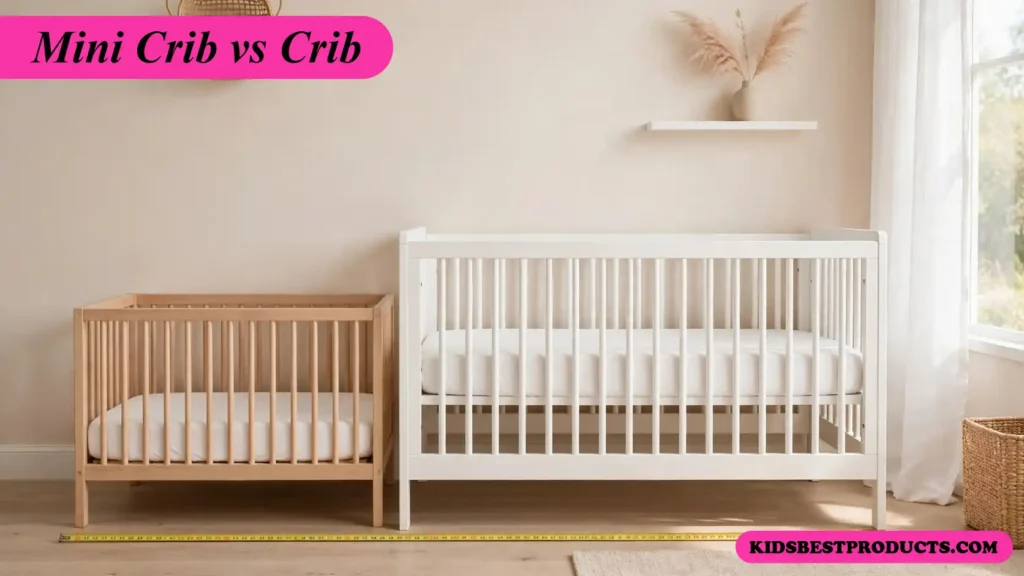
In the mini crib vs crib choice, the main difference is size, and size decides how long each one lasts. A standard crib holds a mattress about 28 by 52 inches. A mini crib’s is usually about 24 by 38 inches, roughly 4 inches narrower and 14 inches shorter. That smaller footprint fits beside your bed or in a tiny nursery. The trade-off is time. Most children outgrow a mini crib somewhere between 12 and 24 months, while a standard crib lasts until your child moves to a bed, often around age 3, and many convert into a toddler bed after that. If you have the space, a standard crib is the longer-lasting buy. If you don’t, or you want your baby beside your bed, a mini crib makes sense. This guide covers the exact dimensions, real costs, and how to decide.
Mini Crib vs Crib at a Glance
| Mini crib | Standard (full-size) crib | |
|---|---|---|
| Inside sleep area | Usually about 24″ x 38″, varies by brand | 28″ x 52⅜” (set by federal standard) |
| Outside footprint | About 26″ to 28″ wide, 40″ to 43″ long | About 30″ to 32″ wide, 54″ to 56″ long |
| Mattress | Non-standard sizes, must match the crib | Standard size, fits any full-size crib |
| Weight limit | Often 30 to 50 lb, varies by model | Commonly 50 lb |
| Used until | About 12 to 24 months, or 35″ tall | Until moving to a bed, often around age 3 |
| Moves easily | Often has wheels or folds | Heavy, usually stays in one room |
| Converts | Some convert to a toddler or twin bed with kits | Most convertible cribs become toddler, day and full beds |
| Sheets and bedding | Fewer choices, must match mattress size | Huge choice, standard sizes |
Mini Crib Dimensions: How Big Is a Mini Crib?
There’s no single mini crib size. US rules don’t set a standard size for mini cribs the way they do for full-size ones. Instead, the CPSC groups them as non-full-size cribs. A crib counts as non-full-size when its inside is shorter than 49¾ inches or narrower than 25⅜ inches, among other limits. Every one must meet the same safety standard, updated for cribs made or imported after April 5, 2025, but the size is up to the maker.
That’s why mini crib dimensions vary more than most parents expect. Compared with a regular crib, the typical mini is about 14 inches shorter and 4 inches narrower inside, which saves roughly 4 square feet of floor. Most land close to 24 by 38 inches inside, but some are much smaller.
| Mini crib | Mattress or sleep area | Notes |
|---|---|---|
| Babyletto Origami | 37″ x 24″ | Folds, rolls on wheels |
| Babyletto Gelato 4-in-1 | 37″ x 24″ | Converts with kits |
| Nestig Wave (mini stage) | Its own non-standard mattress | About 31″ x 24.5″ overall, grows into a full-size crib |
| Bloom Alma | 36″ x 18″ | One of the slimmest, lasts about 12 months |
Mini Crib Mattress Thickness
Mini crib mattresses are usually thinner than full-size ones, and many included mattresses are only 1 to 3 inches thick. Buyers often upgrade. When you do, buy one the crib maker says fits, since a mattress that’s even an inch off can leave a dangerous gap. Our guide to mini crib mattresses covers sizing in detail.
Mini Crib Weight Limit
The mini crib weight limit ranges widely by model, commonly between 30 and 50 pounds, and most also have a height limit of 35 inches. In practice, height or climbing usually ends mini crib use before weight does. Check your crib’s manual for its exact limits.
How Big Is a Standard Crib?
Full-size cribs are much more uniform. Under the CPSC’s full-size crib standard, the inside of every full-size crib sold in the US must measure 28 inches wide (± ⅝ inch) by 52⅜ inches long (± ⅝ inch).
Because of that rule, full-size crib mattresses are made in one standard size, generally at least 27¼ by 51⅝ inches and no more than 6 inches thick. Any standard crib mattress fits any standard crib, and any standard crib sheet fits any standard mattress. The outside of the crib varies more, usually about 30 to 32 inches wide and 54 to 56 inches long, depending on the frame design.
Mini Crib vs Pack and Play vs Bassinet Sizes
Many parents compare all three when space is tight.
| Sleep space | Typical sleep area | Weight or stage limit | Best for |
|---|---|---|---|
| Bassinet | About 15″ to 20″ wide, 30″ to 36″ long | Often 20 lb, or when baby can roll or push up | Newborns beside your bed |
| Pack and play | About 27″ x 39″ (full-size models) | 35″ tall or 30 lb on most | Travel, grandparents, a second sleep space |
| Mini crib | About 24″ x 38″ | Often 30 to 50 lb, 35″ tall | Small rooms, room sharing for longer |
| Standard crib | 28″ x 52⅜” | Commonly 50 lb | The main crib for the long run |
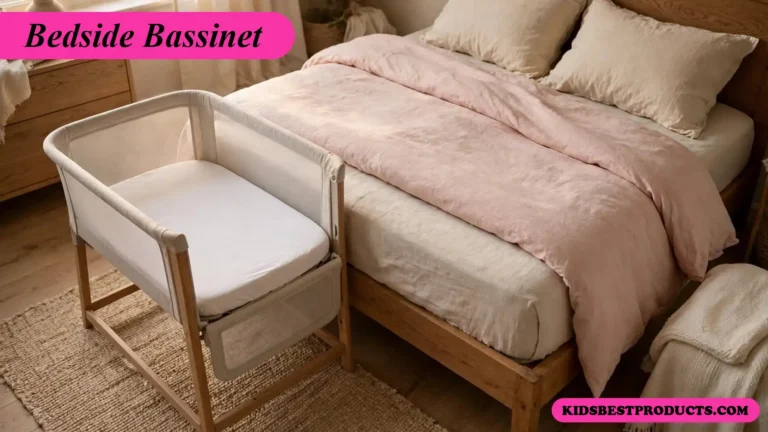
A pack and play’s sleep area is close to a mini crib’s, but the two are built differently. A mini crib is a rigid, slatted crib with a real mattress and several mattress heights. A pack and play has mesh sides, a folding frame and a thin pad, and it’s designed to pack away. For more on those, see our guide to the best pack and plays. If you only need something for the first few months beside your bed, a bedside bassinet is smaller still.
How Much Room Do You Actually Need?
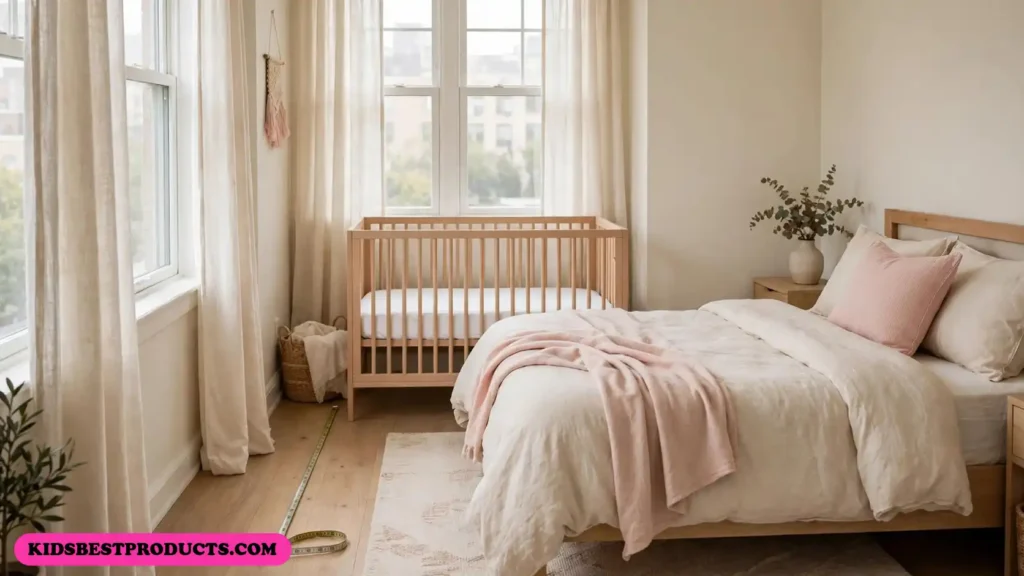
The crib’s footprint is only part of the space it takes up. Before you choose, measure your room with these extra checks.
- Measure the outside, not the mattress. Use the crib’s overall dimensions. A mini crib that’s 24 by 38 inches inside may be over 40 inches long outside.
- Leave space to stand. You need room beside the crib to lift your baby in and out, roughly the width of a person.
- Keep it away from windows and cords. Blind cords, curtains and wall decor shouldn’t be within reach of the crib.
- Check your doorways. In the Reddit r/BabyBumps thread “Mini Crib vs Full Size?”, one parent bought a full-size crib and later found it was too big to fit through the doors. They had to take it apart to move it, which isn’t easy with a newborn. For their second baby, they chose a folding crib on wheels.
- Plan for drawers and doors. Make sure closet doors and dresser drawers can still open fully.
If the nursery is a shared room, a nook in a one-bedroom apartment, or your own bedroom, these measurements often decide the mini crib vs crib question for you.
How Long Does Each One Last?
This is the biggest practical difference.
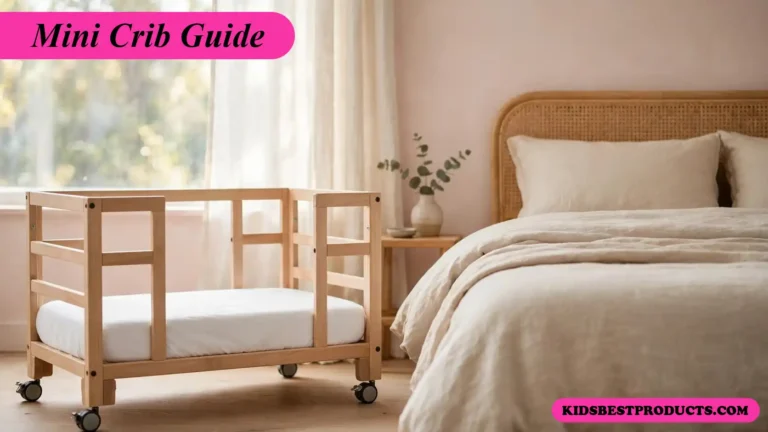
A mini crib lasts until your child reaches its height limit (usually 35 inches), weight limit, or starts climbing out. For most children, that’s between 12 and 24 months, though very slim models may last less than a year. Parents in the Reddit thread reported a wide range. One said their baby didn’t fit by 6 or 7 months in a small living-room mini crib. Another’s daughter used hers until about 20 months, then went straight to a twin bed. A third said an average 2- to 3-year-old could still sleep in theirs. A tall baby will outgrow one sooner. Our mini crib guide covers how long each type lasts.
A standard crib lasts until your child moves to a bed, which is often around age 3, or sooner if they start climbing out. A convertible crib then becomes a toddler bed and later a daybed or full-size bed, so the same frame can last for years.
Cost Over Time
A mini crib often costs less up front, but it can cost more overall if you end up buying a second crib.
| Path | What you buy | When it makes sense |
|---|---|---|
| Mini crib, then a bed | A mini crib, then a toddler or twin bed at 1 to 2 years | Your child is ready for a bed when they outgrow the mini |
| Mini crib, then a full-size crib | Two cribs | You move to a bigger home, or your child is too young for a bed |
| Convertible mini crib | One mini crib plus conversion kits | You want the mini’s size now and a bed later from the same frame |
| Standard convertible crib | One crib, plus a conversion kit later | You have room now and want one purchase |
Two costs are easy to miss. Mini crib sheets and mattresses come in fewer sizes, so they can cost more and be harder to find. One Reddit parent decided against a mini crib partly for this reason. Conversion kits for convertible cribs are usually sold separately too. The Babyletto Gelato’s toddler kit costs about $99 and its full-bed kit about $129, for example.
Mini Crib vs Crib: Which Should You Choose?
Choose a mini crib if:
- You’ll room-share and a full crib won’t fit beside your bed
- You live in an apartment, or the nursery is a small or shared room
- You need a second crib, such as at a grandparent’s house or on another floor
- You’re expecting twins and two full-size cribs won’t fit
- You plan to move your child to a bed fairly early, around 18 months to 2 years
Choose a standard crib if:
- You have room in the nursery now
- You want the crib to last until your child is ready for a big-kid bed
- You want the widest choice of mattresses, sheets and styles
- Your family tends to have tall babies, since they outgrow minis sooner
Mini Crib vs Crib for Twins
The American Academy of Pediatrics recommends that twins and other multiples each have their own sleep space, so you’ll need two cribs. This is where size adds up fast. Two mini cribs save about 28 inches of length compared with two full-size cribs, which can be the difference between both cribs fitting in one room or not. If you have space for two standard cribs, they’ll last longer, but two minis are a safe choice for a smaller nursery.
What Other Parents Chose
The original poster in the Reddit thread had space for either and was drawn to a mini for its folding and wheels. After hearing from parents, they chose a full-size crib for the nursery, a bassinet for the early months, and a pack and play for other rooms. That combination is common when space isn’t a problem.
Can You Swap Mattresses Between Them?
No, never in either direction.
- A mini crib mattress in a standard crib leaves a large gap around the edges, where a baby can become trapped.
- A standard crib mattress in a mini crib won’t fit, and forcing it in can bend the frame or raise the sleep surface too high.
Whatever crib you choose, use only a mattress made for it. Do the two-finger test after setting it up. If you can fit more than two fingers between the mattress and the crib side at any point, the mattress is too small. Use fitted sheets made for that mattress size, too, since a sheet made for a different size can come loose. See how many crib sheets you need for sizes.
The rest of the safety basics are the same for both. Use a bare crib with no pillows, bumpers, blankets or toys, put your baby on their back, lower the mattress as soon as your baby can sit or pull up, and lock any wheels. Our safe sleep positions guide covers the details.
Frequently Asked Questions
The Bottom Line
The mini crib vs crib decision comes down to space and time. A mini crib is about 24 by 38 inches inside, fits where a full crib can’t, and usually lasts 12 to 24 months. A standard crib is 28 by 52⅜ inches inside, uses easy-to-find standard mattresses and sheets, and often converts into a bed that lasts for years. If you have the room, a standard crib is the simpler long-term buy. If you don’t, a mini crib is a safe, practical choice, as long as you use the mattress made for it.

Newsletter Signup
Subscribe to our weekly newsletter below and never miss the latest product or an exclusive offer.