Best Bedside Bassinet for Baby: Which Bassinet Is Best and Why
The best bedside bassinet for most families is the Newton Bassinet and Bedside Sleeper. Its front panel folds down, it straps to your bed, it adjusts to eight heights, and its mattress can be washed. The right choice for you depends mostly on your bed height. Two cheaper options fit different beds well. The Baby Delight Beside Me Dreamer suits lower beds on a budget. The Milliard bedside bassinet suits tall beds that most models can’t reach. If you’d rather swivel the bassinet over your bed than lower a side, the Halo BassiNest is the one parents mention most. Below are eight picks based on what buyers report after months of night feeds. You’ll also find a quick guide to bed height, wheels and drop sides, and the safety rules that matter.
The Best Bedside Bassinets at a Glance
We didn’t test these bassinets ourselves. Instead, we compared each maker’s specs with what buyers say on Target, Walmart, Babylist and brand sites, and with what parents share in Reddit threads. We paid closest attention to complaints that come up again and again, not just star ratings. Prices are as of October 2026 and change often.
| Bassinet | Best for | Price | Side access | Fits bed heights | Weight limit |
|---|---|---|---|---|---|
| Newton Bassinet and Bedside Sleeper | Best overall | About $300 | Fold-down front panel | Mattress top 19.5″ to 25″ | 20 lb |
| Halo BassiNest Swivel Sleeper | Swiveling over the bed | About $250 | Lowering wall plus swivel | Up to about 30″ | 20 lb |
| Arm’s Reach Clear-Vue Co-Sleeper | Storage | About $200 to $220 | Fold-down side | Adjustable legs | Check manual |
| Baby Delight Beside Me Dreamer | Budget bedside | About $144 | Zip-down panel | About 18.5″ to 24″ (6-position model) | 20 lb |
| Milliard Bedside Bassinet | Tall beds | About $165 | Zip-down panel (per owners) | 23″ to 31″ | 20 lb |
| Maxi-Cosi Iora | A roomy sleep space | About $300 | None, slides over the bed | 4 to 5 positions | 20 lb |
| Chicco LullaGo Anywhere LE | Small spaces and travel | About $127 | None | Not bedside height | 20 lb |
| Happiest Baby SNOO | Smart soothing | About $1,995, or rent | None | Not bedside height | Check manual |
What Makes a Bedside Bassinet Different?
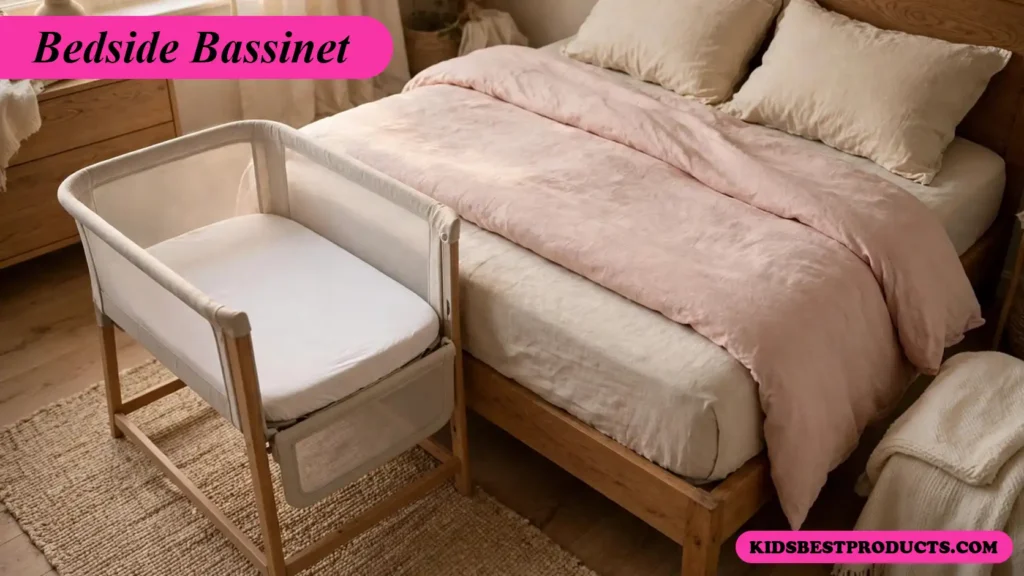
A bedside bassinet, also sold as a bedside sleeper, co-sleeper bassinet or, in the UK, a bedside crib, is a bassinet built to sit flush against your bed. What sets it apart is one side that opens. That side folds down, zips down or slides away, so your baby’s sleep space lines up with your mattress, and you can reach, comfort or lift your baby without getting out of bed.
A regular bassinet has four fixed walls. You can still put one next to your bed, but you’ll need to sit up and reach over the side every time. A bedside sleeper also straps to your bed frame, so it can’t slide away and open a gap.
Here’s how the main types compare.
| Type | How it sits | Side opens? | Good for |
|---|---|---|---|
| Bedside bassinet or bedside sleeper | Strapped flush to your bed | Yes, fold-down or zip-down | Night feeds, C-section recovery |
| Swivel bassinet | Base beside the bed, basket swings over it | Lowering wall on some models | Parents who want the baby over the bed without a gap issue |
| Standard bassinet | Free-standing, anywhere | No | Living room naps, a second sleep space |
| Portable bassinet | Light, folds for travel | Usually no | Small rooms, grandparents’ house |
| Smart bassinet | Free-standing | Usually no | Parents who want motion and sound that respond to crying |
Whatever the label, a bedside sleeper is still a separate sleep space for your baby, not a way to share your bed. The American Academy of Pediatrics recommends that babies sleep in their parents’ room, on their own sleep surface, ideally for at least the first 6 months. A bedside bassinet makes that easier to stick to at 3 a.m. Our guide to room sharing covers the full setup.
The Best Bedside Bassinet Picks, Based on Buyer Reviews
Best Bedside Bassinet Overall: Newton Bassinet and Bedside Sleeper
The Newton checks the most boxes for a bedside sleeper. Its front panel folds down using a removable arm and a hidden zipper, so the sleep space lines up with your bed. Straps run under your mattress and over the bed frame to hold it in place. It has eight heights, and Newton says it fits beds with a mattress top between 19.5 and 25 inches from the floor. The sleep surface is 35 by 19 inches, roomier than many swivel models.
Its biggest selling point is the mattress. The core is mostly air with a food-grade polymer, and both the cover and the core can go in the wash. That matters more than it sounds once you’ve dealt with your first diaper leak or spit-up at night.
What buyers like: The adjustable height, a sturdy feel, the drop-down panel for watching the baby from bed, and how close it sits to the bed. In a Reddit r/BabyBumps thread about bassinets that open from the side, one parent said theirs “pushes right up to the edge” of the bed. Another said the straps meant it wouldn’t topple if someone bumped it during the night.
What buyers complain about: Complaints are thin. It averages about 4.2 out of 5 from more than 300 reviews on Newton’s site, but the reviews shown there lean positive, so it has less independent feedback than retail-sold picks. The main limit to know is bed height. If your mattress top sits above 25 inches, Newton says it still works, but your baby will lie lower than you.
Good to know: It lists at about $300, though Newton often runs discount codes. It comes with a muslin sheet and a carry bag.
Best for Swiveling Over the Bed: Halo BassiNest Swivel Sleeper
The Halo BassiNest takes a different approach. Instead of attaching to your bed, it sits on a heavy base that slides under the bed frame. The basket rotates 360 degrees, so you can swing it over your mattress for a feed and back out when you get up. A lowering wall on the bed side gives you easy reach.
What buyers like: The swivel is the feature parents mention most. One Target reviewer called it “clutch.” A Reddit parent liked starting the baby “on” the bed and swinging the bassinet out of the way without moving the whole unit. Parents also like how close it keeps the baby and how sturdy it feels once it’s set up.
What buyers complain about: It averages about 4.1 out of 5 from nearly 300 Target ratings, with more one-star reviews (about 14%) than most picks here. The base is big and heavy, buyers say it’s “a real ordeal to move,” and it has no wheels. Several wish the swivel could lock. The sleep area is also on the small side at about 30 by 18 inches. One Reddit parent’s baby doubled his weight by 2 months and outgrew theirs early, so plan for a backup if you’re expecting a big baby.
Good to know: It fits beds up to about 30 inches, and works best with a bed frame at least 4.5 inches off the floor so the base can slide under. The newer BassiNest 4.0 has redesigned legs that Halo says fit more beds. For sheets, weight limits and how the Halo versions compare, see our Halo BassiNest review.
Best Bedside Sleeper With Storage: Arm’s Reach Clear-Vue Co-Sleeper
Arm’s Reach has made co-sleeper bassinets since 1997, and its name comes up again and again in parent threads. The Clear-Vue has a fold-down side for bedside use, adjustable legs, a nylon strap to secure it to your bed, and a large storage area under the sleep space for diapers, wipes and spare sheets.
What buyers like: The storage, quick assembly, a sturdy feel and the compact design. It averages about 4.8 out of 5 from more than 100 ratings. On Reddit, parents described using one with both of their kids and taking a portable version on trips. One said it “travels well.”
What buyers complain about: Very little. One buyer found the screws tough to line up during assembly, and another felt it looked plainer than newer designs. The one- and two-star ratings don’t have written explanations.
Good to know: It costs about $200 to $220 depending on color. Arm’s Reach bassinets show up often secondhand, which can cut the cost further. Check the model on CPSC.gov for recalls first.
Best Budget Bedside Bassinet: Baby Delight Beside Me Dreamer
At about $144, the Beside Me Dreamer is the lowest-cost true bedside sleeper here. It has a zip-down panel on the bed side, straps and anchors to attach it to your bed, mesh walls and a fold for storage. It’s rated for babies up to 20 pounds, roughly birth to 5 months.
What buyers like: It averages about 4.5 out of 5 from more than 500 Target ratings. Buyers praise the tool-free setup, the zip-down side for night feeds, the mesh airflow, and a roomier sleep area than they expected. One Reddit parent simply said theirs was “great.”
What buyers complain about: The zipper broke for one buyer after three months. Others mention wobbly legs, a loud and stiff front bar, misaligned clips, missing or outdated assembly instructions, and a mattress some replaced. The mattress problem is the one to take seriously. Use only the maker’s own replacement mattress, never a thicker one from another brand.
Good to know: Height ranges differ by version. Baby Delight’s own answers on Target put the 6-position model at about 18.5 to 24 inches and the 8-position model at about 22 to 30 inches. A buyer with a 34-inch bed was told it isn’t designed for that height. Measure first, then pick the version that fits.
Best for Tall Beds: Milliard Bedside Bassinet
Tall beds rule out many bedside bassinets, which makes the Milliard the best bedside bassinet for a high mattress. It reaches higher than most, with a range of 23 to 31 inches. It also has wheels, a bed strap and a foam mattress with a wipe-clean cover.
What buyers like: This is one of the most recommended bassinets in Reddit parent threads. One parent with an extra-tall bed said it was the only model they could find with a setting high enough. Others liked the zip-down side, side pockets for bottles, and a fabric cover that unzips for washing. One parent used it for two babies with no regrets.
What buyers complain about: It’s large, with a big footprint. One owner said the wheels “aren’t put on super well.” Another warned the mattress is very hard, and their daughter never slept in it. Firm is what safe sleep requires, but it’s worth knowing before you buy. Target buyers also mention trouble finding replacement sheets.
Good to know: It costs about $165 on Target, but it has only a handful of Target reviews so far, so most feedback comes from parent forums. It isn’t GREENGUARD Gold certified. Parents on Reddit also said Milliard bassinets turn up on Facebook Marketplace for about $40 to $50.
Best for a Roomy Sleep Space: Maxi-Cosi Iora
The Iora isn’t a drop-side sleeper. Instead, its base slides side to side so the bassinet can sit partly over your bed, and it adjusts up and down to match your mattress. Its 32-by-20-inch mattress is one of the larger ones here, and it folds flat into a travel bag.
What buyers like: It averages about 4.7 out of 5 from more than 90 Babylist reviews. Buyers praise the easy setup, the large sleep space that lasts several months, mesh sides for seeing the baby, the storage basket and a sturdy build.
What buyers complain about: The sides don’t fold down, so you still reach over a wall. A few buyers report a sleep surface that sat tilted or felt unstable, and one said their baby rolled against the mesh. At about 24.5 pounds, it’s also heavy for travel, and replacement sheets can be hard to find online.
Good to know: If your bassinet surface doesn’t sit level on your floor, stop using it and contact the maker. A level surface matters for any infant sleep product.
Best for Small Spaces and Travel: Chicco LullaGo Anywhere LE
For a small bedroom, or a bassinet that moves between rooms and to the grandparents’ house, the LullaGo Anywhere is light at about 12.6 pounds. Its legs snap off, and it folds flat into the included carry bag. It isn’t a bedside sleeper, since it has no opening side, but its small footprint fits next to most beds.
What buyers like: It averages about 4.7 out of 5 on Target. Buyers like how easy it is to carry, the quick setup, mesh sides, GREENGUARD Gold certification and a machine-washable cover. One Reddit parent said all the other bassinets were “way too big” and this one was the bassinet they actually used.
What buyers complain about: Babies outgrow it fast. The mattress is only 28 by 15 inches, the smallest here. Buyers also say the included sheet feels cheap, and only one comes in the box. One reviewer felt it got unstable as their baby neared the weight limit.
Good to know: At about $127, it’s the cheapest pick. Treat it as a newborn and travel bassinet, and plan on a crib or mini crib within a few months.
Best Smart Bassinet: Happiest Baby SNOO
The SNOO responds to crying by increasing its rocking motion and white noise, and it uses a clip-in swaddle to keep your baby on their back. Happiest Baby says it’s the only baby bed with FDA De Novo authorization for keeping sleeping babies on their backs.
What buyers like: Parents with babies who wake constantly say it buys real sleep. In the r/newborns thread about bedside bassinets, one mom said nothing worked for her baby until she rented a SNOO.
What buyers complain about: The price, an app that some find finicky, and no wheels or drop side. Reviewers also note that weaning a baby off the motion can take work.
Good to know: It lists at about $1,995. Renting costs $159 a month plus a reconditioning fee, return shipping and a deposit, which makes more sense for most families. It’s not a bedside sleeper, so it sits next to your bed like a standard bassinet.
Popular Bassinets With Complaints Worth Knowing
The Chicco LullaGlide 3-in-1 shows up on several “best bassinet” lists, and it averages a strong 4.6 out of 5 on Target. Read the low reviews before buying, though. Buyers repeatedly report tripping over its wide, splayed legs, and several say the clip that holds the bassinet to its stand didn’t stay locked, with one saying the bassinet fell. One parent also reported their baby rolling during the gliding motion. If you choose it, check the latch every single time.
Some bedside models also advertise an “anti-reflux” incline setting. Since 2022, US law has banned inclined sleepers with a sleep surface steeper than 10 degrees, and safe sleep guidance calls for a flat surface. If your baby has reflux, ask your pediatrician before using any tilt feature, and keep it flat otherwise.
Will a Bedside Bassinet Actually Help Your Baby Sleep?
It helps you more than it helps your baby, and that’s still worth a lot.
In an r/newborns thread titled “Did a bedside bassinet actually help?”, a mom of a 3-week-old said her baby wouldn’t sleep anywhere but against her. Several parents replied that this was “a newborn thing, not a bassinet thing.” Newborns want to be close, and no bassinet changes that overnight.
What a bedside model does well is make every resettle easier. One mom said it let her keep putting her baby back down without getting out of bed, even on nights she tried 10 to 20 times. Another family committed to theirs at 9 weeks, and after one hard night, their baby slept in it every night until 6 months. If you already have a pack and play with a bassinet insert that fits beside your bed, one parent pointed out it does much the same job. See our guide to pack and plays with bassinets.
Habits that help a baby settle in it
- Use it for naps too, so it feels familiar before night time.
- Wait until your baby is in deeper sleep before the transfer.
- Rest a hand on their chest during squirms. A parent with a zip-down side said this settled her baby back to sleep.
- Keep the room dark, with white noise placed outside the bassinet.
- Give it time. One parent said things “just clicked” at around 5 weeks.
Skip the tricks that add risk. Don’t put a heating pad, your shirt, a blanket or a pillow in the bassinet, and always lay your baby on their back. If you’re so tired you’re falling asleep while holding your baby, put them down in the bassinet. Falling asleep with a baby on a sofa or soft bed is far riskier than a few minutes of fussing in a safe space.
How to Match a Bedside Bassinet to Your Bed Height
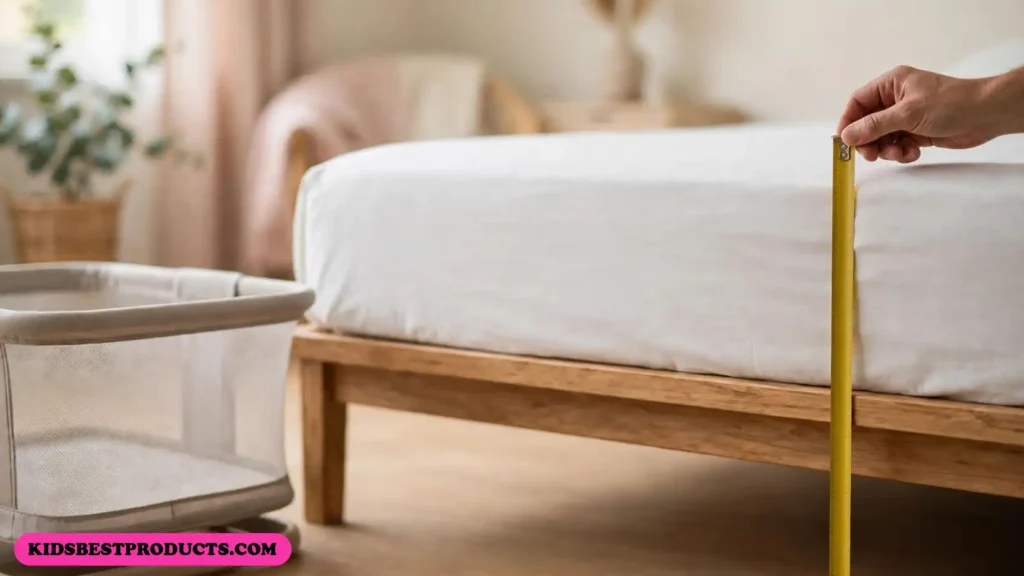
Bed fit is one of the most common complaints in buyer reviews, and the best bedside bassinet on paper won’t help if it can’t line up with your mattress. Measure before you shop.
- Measure from the floor to the top of your mattress. Include any topper, and measure where you’ll actually sleep.
- Check the maker’s bed-height range. Look for the range of adult bed heights it fits, not just the bassinet’s own height. These are listed differently across brands, so check the Q&A or manual if the listing is unclear.
- Check what’s under your bed. Swivel models like the Halo need a bed frame with clearance underneath for the base. Platform beds and beds with drawers can block them.
- Check the legs and your floor. Several Reddit parents said flat legs that slide under the bed let the bassinet sit closer than legs that stick out. Wide, splayed legs are also a common source of stubbed toes in buyer reviews.
| Your mattress top height | Models that fit |
|---|---|
| Under 20 inches (low or floor beds) | Newton, Baby Delight 6-position model |
| 20 to 25 inches (most standard beds) | Newton, Baby Delight, Halo, Arm’s Reach, Maxi-Cosi Iora |
| 25 to 31 inches (tall beds, thick mattresses) | Milliard, Halo, Baby Delight 8-position model |
| Over 31 inches | Few bedside models reach this. Use a free-standing bassinet at the bed’s side instead |
How to Set Up a Bedside Bassinet, Step by Step
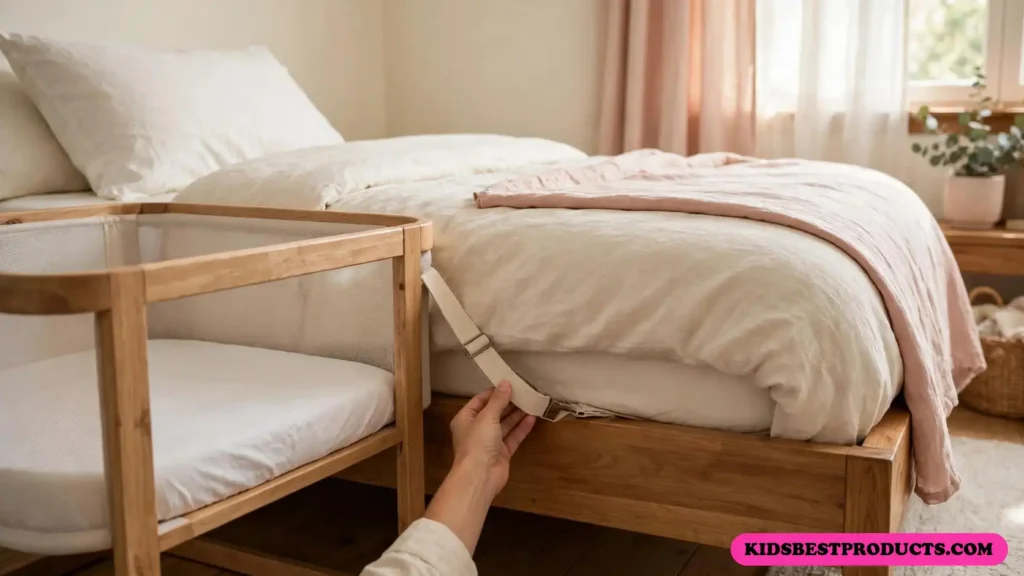
Even a well-made bedside sleeper is only as safe as its setup. Follow your manual first, since every model attaches a little differently. These steps cover what most of them have in common.
- Build it in the bedroom. Assembled bassinets can be awkward to carry through doors, and you’ll want to test the fit against your actual bed.
- Set the height before you attach it. Adjust the legs so the bassinet sits where the maker specifies against your mattress. Newton, for example, says the sleeper’s base should sit lower than the top of your mattress. Its walls should still rise above your mattress on the open side, so your baby can’t roll onto your bed.
- Run the straps correctly. Most straps go under your mattress and around the bed frame or box spring, then buckle back to the bassinet. Pull them tight.
- Check for a gap. Push the bassinet away from the bed with your hand. If any space opens between the two, tighten the straps and try again. There should be no gap you can fit fingers into.
- Check that it’s level. Look at the sleep surface from the side, or use a phone level app. If it tilts, adjust the legs or contact the maker.
- Test the side lock. Raise the side and make sure it clicks or zips fully closed. You’ll need it up whenever the bassinet isn’t attached.
- Move your bedding. Pull your pillows and duvet back from the open side, and keep cords from monitors or lamps out of reach.
Recheck the straps every week or two. Mattresses shift as you get in and out of bed, and straps can loosen slowly without you noticing.
Is a Bedside Bassinet Safe?
Yes, when it’s set up as the maker instructs. Bedside sleepers in the US must meet two federal standards, the bassinet standard and a separate CPSC bedside sleeper standard. That one covers how the sleeper attaches to an adult bed, how far it can separate from the bed, and how the drop-down side locks. The bassinet standard was updated again in 2026 and now covers replacement mattresses too.
Most safety problems come from setup, so follow the steps above. Beyond the setup, these rules matter most.
- Use only the mattress it came with. Don’t add a thicker pad, a topper or a second mattress. Extra padding is a suffocation risk, and a raised surface makes the walls too low.
- Keep it bare and flat. Baby goes on their back, with no pillows, bumpers, blankets or loungers inside. See our safe sleep positions guide.
- Lock the wheels whenever your baby is in it.
- Stop at the limit. Stop using the bassinet when your baby reaches the weight limit (usually 20 pounds) or can roll over, push up on hands and knees, or sit up, whichever comes first.
If anything about your baby’s sleep worries you, such as breathing pauses, reflux or a baby who seems unwell, talk to your pediatrician rather than adjusting the bassinet to fix it.
Do You Want Wheels on a Bassinet?
Parents disagree on this one. In the r/BabyBumps thread, the top-voted reply argued against wheels on a bedside model, because flat legs slide under the bed and let it sit closer. Parents who moved one bassinet between the living room and bedroom liked rolling it.
Wheels make sense if you’ll use the bassinet in more than one room and have hard floors. Skip them if it will stay strapped to your bed, or if you have thick carpet, where small casters drag. Of our picks, the Milliard and Arm’s Reach have wheels, while the Halo’s heavy base is hard to move at all.
Are Smart Bassinets Worth It?
For most families, no. A standard bassinet does the one job that matters, giving your baby a flat, firm, separate sleep space. Smart models like the SNOO add motion and sound that respond to crying, and parents of babies who woke constantly say the extra sleep was worth it.
| Standard bedside bassinet | Smart bassinet | |
|---|---|---|
| Price | About $125 to $300 | About $600 to $2,000, or rent |
| Drop side for bedside use | Often | Rarely |
| Soothing | You do it | Responds to crying automatically |
| Learning curve | None | App setup, and weaning off the motion later |
If you’re unsure, start with a standard bedside bassinet. If your baby turns out to be a very light sleeper, renting a smart bassinet for a few months costs far less than buying one up front.
The Best Bassinet for Small Spaces and Twins
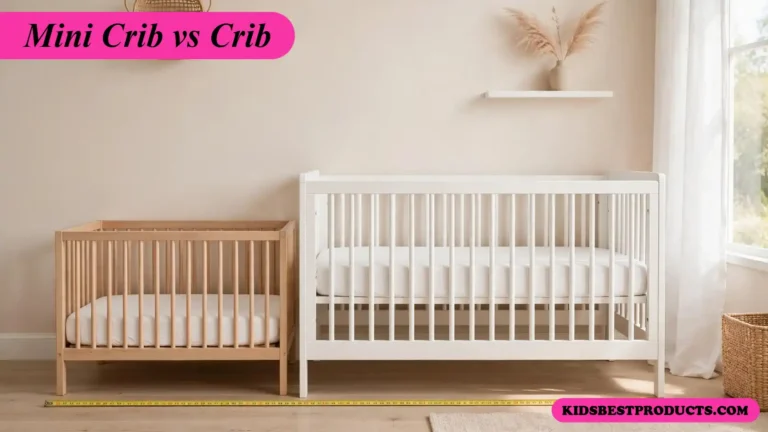
For small rooms, look at the outside footprint, not the mattress size. Swivel models need room for a wide base. Bedside sleepers with legs that slide under your bed take up the least floor space beside it. The Chicco LullaGo is the most compact pick here, and one Reddit parent compared most bassinets to “the size of a smart car.” If you’re short on space, a mini crib beside the bed can replace both the bassinet and the full crib for the first year or more.
For twins, the AAP recommends each baby have their own sleep space, so plan on two bassinets, never one shared. Two slim bassinets, one on each side of the bed, often work better than two bulky models side by side. Choose models with straps so each one stays put.
Do You Really Need a Bassinet?
Not always. Most babies outgrow a bassinet somewhere between 3 and 6 months, and one Reddit parent put it plainly: “You only use the bassinet for like 3 months.” For the exact signs, see how long a newborn can sleep in a bassinet. You can skip it if a crib, mini crib or pack and play fits in your bedroom, since a baby can sleep in a crib from birth.
A bedside bassinet earns its cost if you’re breastfeeding at night, recovering from a C-section, or short on bedroom space. If you’re on the fence, buy secondhand. Parents in both Reddit threads found them on Facebook Marketplace and Buy Nothing groups for $40 or less. Check the exact model on CPSC.gov for recalls, make sure every strap and the original mattress are included, and skip anything with a cracked frame, torn mesh or a lock that doesn’t click.
What to Look for When Comparing Bassinets
Beyond bed height and side access, which are covered above, these points help you narrow down the best bedside bassinet for your room.
- Sleep space size. Larger surfaces, like 35 by 19 inches or more, last longer for big babies.
- Washable parts. A machine-washable cover, and ideally a washable mattress.
- Footprint and legs. Flat legs that slide under the bed, or a base that fits your floor.
- Sheets. Check that replacement sheets are easy to buy. Our crib and bassinet sheet guide covers sizes.
- Certifications. JPMA and GREENGUARD Gold are good signs on top of the required federal standards.
Frequently Asked Questions
The Bottom Line
The best bassinet is the one that fits your bed and gets used. For most families, the best bedside bassinet is the Newton, with its fold-down panel, eight heights and washable mattress. On a budget, the Baby Delight Beside Me Dreamer covers the basics for low and standard beds. For tall beds, the Milliard reaches where others can’t. If you want to swing the bassinet over your bed, the Halo BassiNest is the parent favorite, as long as you’re fine with its heavy base. Whatever you choose, measure your bed before you buy, strap it flush with no gap, and keep the sleep space bare and flat.

Newsletter Signup
Subscribe to our weekly newsletter below and never miss the latest product or an exclusive offer.