Milk Tongue vs Thrush: How to Tell the Difference
A white tongue gets blamed on thrush far more often than it should. One lactation consultant writes that most of the babies brought to her for thrush turned out to have nothing more than milk residue. The two can look almost identical in a quick glance, which is how parents end up worrying about an infection that isn’t there, or missing one that is. The good news is that a simple wipe test and a closer look at where the white shows up usually settle it. Here’s how to tell milk tongue vs thrush apart, what each one needs, and when it’s time to call your doctor.
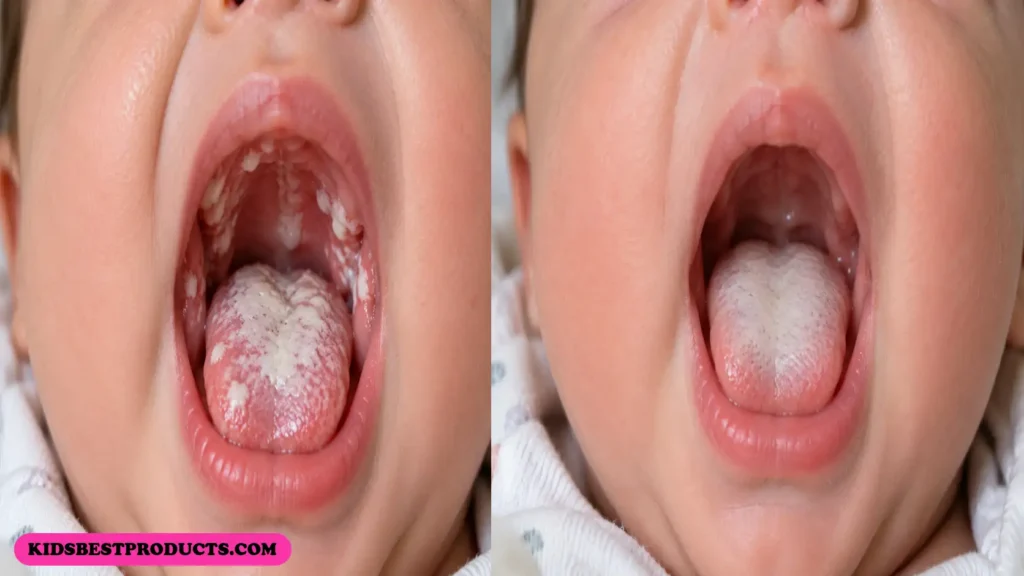
In the milk tongue vs thrush question, the wipe test does most of the work. Wrap a clean, damp cloth around your finger and gently wipe your baby’s tongue. Milk tongue wipes away easily, leaves a normal pink tongue, and only coats the tongue. Thrush doesn’t wipe off easily, may leave the skin underneath red or raw, and usually shows up on the inner cheeks, gums, lips, or roof of the mouth too. Milk tongue needs no treatment. Thrush often needs an antifungal medicine from your doctor.
What Is Milk Tongue?
Milk tongue is simply a thin layer of milk left on the tongue after a feed. It’s harmless, common in the first months, and most noticeable right after feeding.
It builds up because young babies make relatively little saliva, so there’s less to wash milk away. Some parents notice a thicker coating with formula than with breast milk, though breastfed babies get milk tongue too. Anatomy can also play a part. Normally the tongue presses against the roof of the mouth and wipes itself clean, so a baby with a tongue tie or a high palate may keep more of a coating.
It fades on its own as babies make more saliva and start solid foods, so there’s nothing to treat.
What Is Thrush?
Oral thrush is a yeast infection caused by an overgrowth of Candida albicans, a fungus that normally lives on the skin and in the mouth without causing problems. It’s common in young babies. Around 1 in 7 babies get oral thrush at some point, and it’s most common in the first 10 weeks of life.
Babies can pick up Candida from their mother during birth, and their immune systems are still learning to keep it in check. Antibiotics taken by the baby or a breastfeeding parent can tip the balance, and pacifiers or bottle teats that aren’t sterilised well can keep reintroducing it.
Thrush looks like creamy white patches that can join together and turn yellowish or grey, a bit like cottage cheese. Many babies aren’t bothered by it at all. Others get a sore mouth, drool more, or fuss and pull away during feeds.
How to Tell Milk Tongue vs Thrush Apart
Two checks settle it in most cases, the wipe test and where the white appears. Milk stays on the tongue, while thrush spreads.
| Milk tongue | Thrush | |
|---|---|---|
| Where it shows up | Tongue only | Tongue plus inner cheeks, gums, lips, or roof of the mouth |
| Wipe test | Wipes away easily, pink tongue underneath | Hard to wipe off, may leave red or raw skin |
| Look | Thin, even white coating | Patchy, raised, cottage cheese-like spots |
| Timing | Most visible after feeds | Stays all day |
| Baby’s comfort | Not bothered |  Can Milk Tongue Turn Into Thrush?No. Milk residue doesn’t cause thrush, since they have completely different causes. A baby can have both at the same time, though, so if a coating that used to wipe away starts sticking or spreading, take another look. How to Clean Your Baby’s TongueMilk tongue doesn’t need cleaning, but a gentle wipe helps it look less coated.
If the coating won’t budge, stop and check for thrush rather than wiping harder. How Thrush Is TreatedMild thrush sometimes clears on its own within a few days. If your doctor decides to treat it, the usual options are antifungal drops or gel. Nystatin drops are often the first choice for babies. Miconazole oral gel is another option, but it isn’t licensed for babies under 4 months old, or for the first 5 to 6 months in babies born prematurely, because of a choking risk from their immature swallowing reflex. Some doctors still prescribe it for younger babies, so follow their instructions closely. Apply only a small amount at a time, after a feed, and never toward the back of the throat. Treatment usually continues for 2 days after the white patches have gone. If the thrush hasn’t cleared after 7 days of treatment, go back to your doctor. Most cases clear within about 2 weeks once treatment starts. Milk Tongue vs Thrush When You’re BreastfeedingThrush can pass back and forth between a baby’s mouth and a breastfeeding parent’s nipples. Signs on the nipples include burning or shooting pain during and after feeds, especially after feeding had been comfortable before, and skin that looks shiny, red, flaky, or cracked. If either of you is diagnosed, talk to your doctor about treating both of you at the same time, since treating only one often leads to the infection bouncing back. A milk tongue vs thrush mix-up matters here too. Nipple pain from a shallow latch can feel similar, so it’s worth having the latch checked before assuming thrush. Thrush and Diaper RashThe same yeast can cause a diaper rash, often bright red with a raised border and small red spots around the edges. A rash like this alongside white patches in the mouth makes thrush more likely. Our guide to [diaper rash treatments](INTERNAL-LINK: ART-035) covers how to spot and treat a yeast rash. How to Prevent Thrush Coming BackMost bouts of thrush have no clear cause, but a few habits lower the chance of it returning.
Other White Spots in a Baby’s MouthNot every white mark is milk or thrush. Small, firm white or yellowish bumps on the gums or roof of the mouth are often Epstein pearls, which are harmless and fade on their own. See our guide to white spots on a newborn’s gums. A small blister in the middle of the upper lip is usually a sucking blister, which also clears without treatment. If a tight band of tissue seems to limit how your baby’s lip or tongue moves, it may be worth reading about what a lip tie looks like. When to Call Your DoctorMilk tongue never needs a doctor’s visit, but call your pediatrician or health visitor if you notice any of these.
Frequently Asked QuestionsThe Bottom LineMost white tongues are milk, not infection. If the coating wipes away and stays on the tongue, it needs nothing. If it sticks, spreads, or comes with fussy feeds, it’s likely thrush, and your doctor can usually clear it within a couple of weeks. This article is for general information and isn’t a substitute for medical advice. Always check with your pediatrician or health visitor before giving your baby any medicine. Newsletter SignupSubscribe to our weekly newsletter below and never miss the latest product or an exclusive offer. Similar Posts
|